
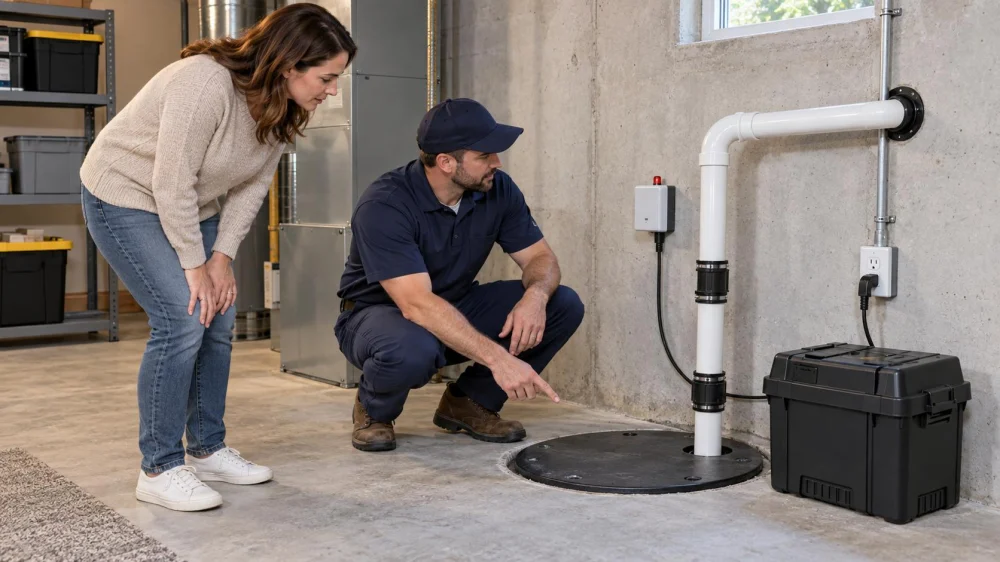
Sump Pump Test: Power, Float, Discharge, and Backup
On this page
Quick answer
Test a sump pump before wet weather using the manufacturer’s instructions. Keep hands and extension cords away from water, inspect the power source and pit from a dry position, add clean water only if the manual allows it, and confirm the float starts and stops the pump. Check the discharge path, battery backup, high-water alarm, and maintenance date, then call a plumber for faults.

Stashluk Mechanical Contractors Inc. / stashluk
Franklin TownshipHunterdon CountyNew Jersey
998 Croton Rd, Pittstown, NJ 08867, USA
Before the test
Locate the pump manual, electrical panel label, outlet, discharge route, backup system, alarm, and safe walking path. Wear suitable footwear and use a flashlight rather than reaching into a dark pit. Keep children and pets away.
Do not touch a plug, pump, switch, or electrical equipment if it is wet or if you are standing in water. If the area is already flooded, leave it and contact qualified emergency or electrical help.
Bill Trombly Plumbing - Heating - Cooling - Electric / jim trombly heating
ManchesterHillsborough CountyNew Hampshire
76 Maple St, Manchester, NH 03103, USA
Run a controlled test
- Inspect the pit cover, visible cord, outlet, and float without dismantling equipment.
- Remove only loose surface debris that can be reached safely with power isolated as the manual requires.
- If permitted, pour clean water slowly into the pit until the float activates.
- Confirm the pump starts, water level falls, and the pump stops without rapid cycling.
- Listen for grinding, repeated clicking, heavy vibration, or an alarm.
Do not lift, tie, or force the float by hand unless the manufacturer specifies that test. Never run a pump dry or bypass a safety control.
Check discharge
From outside and away from moving parts, confirm water exits at the intended location without returning toward the foundation. Look for a frozen, disconnected, crushed, leaking, or blocked pipe. Do not open buried lines or sewer connections; discharge rules vary by locality and improper routing can damage property or violate code.
A missing or failed check valve may cause water to flow back into the pit. Have a plumber assess repeated cycling, hammering, leaks, or uncertain routing.
Test backup and alarm
Follow the backup manufacturer's procedure, including battery condition, fluid or replacement rules, charger indicators, and simulated power failure. Do not disconnect household power casually or handle battery terminals without the required precautions. Test high-water alarms and notification apps, then verify contacts and alert volume.
A backup pump has limited capacity and runtime. It does not make a flood-prone basement safe for occupancy during severe weather.
Stop and call
- Wet, damaged, hot, sparking, or repeatedly tripping electrical equipment
- Sewage, chemical contamination, or strong fuel odour
- Pump runs but water does not fall
- Continuous running or rapid cycling
- Cracked pit, loose piping, failed valve, or indoor discharge
- Floodwater rising faster than the system can remove it
Follow evacuation orders and never remain in a basement during dangerous flooding.
Keep a record
Note the test date, start and stop behaviour, alarm and backup result, battery age, maintenance performed, and plumber recommendations. Photograph labels and routing from a safe, dry location. Schedule professional inspection at the interval recommended for the system and before predictable storm seasons.
Frequently asked questions
How often should I test it?
Follow the manufacturer and plumber; test before wet seasons and after maintenance or a prolonged outage.
Can I use an extension cord?
Sump pumps should use the approved electrical setup; ordinary extension cords near water can be hazardous.
Why does the pump start every minute?
Possible causes include inflow, backflow, float problems, or capacity issues. Arrange prompt assessment.
Will a battery backup prevent all flooding?
No. Battery capacity, pump condition, inflow, discharge, and storm duration all limit protection.
Sources and notes
FEMA's urban flooding guidance asks homeowners to consider annual sump-pump maintenance, battery backup, and high-water alarms. Ready.gov flood guidance recommends considering a battery-backed sump pump and warns not to touch wet electrical equipment or equipment while standing in water.
Next steps
Find the manual, inspect only from a dry position, run the approved water test, verify discharge, backup, and alarm, and document the result. Arrange professional service for electrical concerns, unusual operation, contamination, failed components, or inadequate capacity.
 Jerry's Plumbing0.0 (0 reviews)
 Eagle Plumbing & Repairs4.0 (23 reviews)
 Cain's Able Plumbing4.0 (619 reviews)
 CAC Plumbing, LLC4.0 (29 reviews)
 Pinkerton Plumbing5.0 (19 reviews)
 Jeff Underwood Plumbing5.0 (2 reviews)
 Toilet Shutoff Valve: Locate, Test Gently, and Label
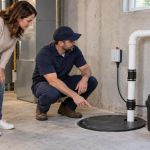 Sump Pump Test: Power, Float, Discharge, and Backup
 Water Meter Leak Check: Confirm Flow Before You Call
 Washing Machine Hoses: Inspect, Replace, and Prevent Leaks
 Slow Bathroom Sink Drain: Safe Checks Before Chemicals
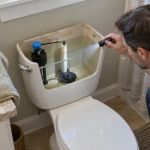 Running Toilet Diagnosis: Safe Checks Before Repair