
Water Meter Leak Check: Confirm Flow Before You Call
On this page
- Quick answer
- What a meter check can show
- Prepare a true no-use period
- Read the meter without unsafe access
- Interpret movement carefully
- Isolate only systems you can control safely
- Document results for the right call
- When to act urgently
- Frequently asked questions
- Sources and evidence notes
- Conclusion and next steps
Quick answer
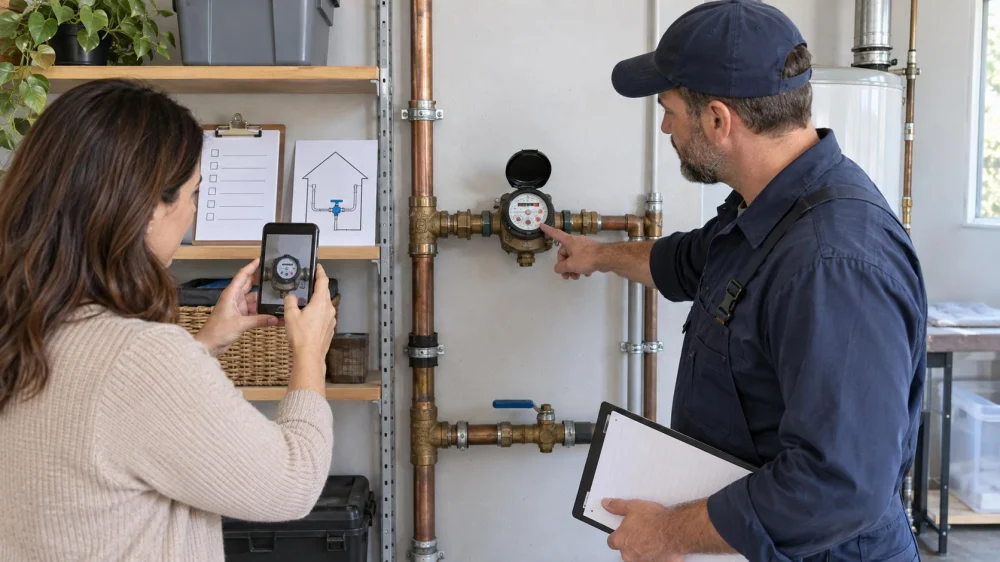
To check for a possible plumbing leak, turn off all known water uses, stop scheduled appliances and irrigation, and make sure no one will open a tap. Photograph the water meter, wait for a measured period, then compare the display. Movement can indicate water use, but it does not locate the leak. Do not operate utility-owned valves or enter unsafe pits; contact the utility or a plumber when access, ownership, or results are unclear.
Stashluk Mechanical Contractors Inc. / stashluk
Franklin TownshipHunterdon CountyNew Jersey
998 Croton Rd, Pittstown, NJ 08867, USA
What a meter check can show
A static meter check compares the water meter before and after a period when no intentional water use should occur. A change suggests water passed through the meter, but the cause may be a fixture, appliance, irrigation system, treatment equipment, service line, or activity you did not account for.
This guide is for US homeowners, including Boone, North Carolina. Meter type, ownership, access, billing units, and utility procedures vary. Follow the local water utility's instructions.
Bill Trombly Plumbing - Heating - Cooling - Electric / jim trombly heating
ManchesterHillsborough CountyNew Hampshire
76 Maple St, Manchester, NH 03103, USA
Prepare a true no-use period
- Tell everyone in the home not to use taps, toilets, showers, ice makers, or appliances.
- Pause irrigation, water softener regeneration, filtration backwash, pool filling, and humidifiers.
- Turn off washing machines and dishwashers rather than testing mid-cycle.
- Check that exterior hoses and automatic animal watering devices are not flowing.
- Note any fire sprinkler, medical, heating, or safety system that must not be interrupted.
- Choose a time when maintaining no use is realistic.
Read the meter without unsafe access
- Locate the customer-readable display using the bill, property records, or utility guidance.
- Do not enter a flooded, unstable, traffic-exposed, insect-filled, or confined meter pit.
- Do not break seals, remove utility equipment, or operate a valve you do not own.
- Photograph the full display and meter identity if safely visible.
- Record the time, unit, and every digit or dial position.
- After the chosen interval, take a second photo from the same position.
Interpret movement carefully
If the reading changes, first confirm that no planned or automatic use occurred. A small leak indicator can show low continuous flow, but digital displays may cycle between screens or update at intervals. Use the meter manual or utility explanation for the specific model.
No movement during a short test does not rule out intermittent leaks. Toilets, irrigation, appliance valves, temperature-related pressure relief, or underground leaks may appear only at certain times.
Isolate only systems you can control safely
Check toilets, taps, appliances, exterior fixtures, irrigation, and visible piping for clues. If the homeowner-owned main shutoff is known, accessible, and in good condition, a plumber or utility can advise whether closing it helps distinguish building plumbing from the service line.
Do not force a corroded valve or repeatedly operate an old shutoff during an active emergency. A failed valve can worsen the leak and leave the property without control.
Document results for the right call
- Save meter photos with timestamps and the no-use checklist.
- Compare recent bills using the same units and billing period length.
- Record damp areas, sounds, pressure changes, running toilets, warm floor spots, and irrigation issues.
- Call the utility for meter ownership, public-side leaks, reading questions, or account concerns.
- Call a licensed plumber for customer-side diagnosis, damaged shutoffs, hidden leaks, and repair.
- Contact insurance promptly when water damage or loss coverage may apply.
When to act urgently
Shut off water at a known safe customer valve and call a plumber for active spraying, rapidly spreading water, ceiling bulging, a burst pipe, or a major unexplained meter change. Stay out of rooms with sagging ceilings.
Keep away from water near electrical panels, outlets, appliances, or damaged wiring and call emergency services or the utility as appropriate. Suspected sewage, contaminated water, gas smell, or structural damage requires specialised emergency guidance.
Frequently asked questions
Does a moving leak indicator prove there is a pipe leak?
It proves the meter detects flow or its display is changing, not where or why. Recheck planned uses and automatic equipment before diagnosis.
Can I use the meter shutoff to stop a leak?
Do not operate a utility-owned or sealed valve without permission. Use the homeowner shutoff only when it is known, safe, and intended for customer operation.
Why is my bill high if the meter does not move now?
The use may have been intermittent, seasonal, already stopped, misread, or related to the billing period. Compare dated records and contact the utility and plumber as appropriate.
Sources and evidence notes
This article uses general water-audit and plumbing safety principles: create a true no-use period, document readings, distinguish detection from location, respect utility ownership, and escalate active damage. The local utility, meter instructions, property plumbing records, local code, and licensed plumber govern a specific home.
Conclusion and next steps
Choose a no-use window, stop automatic water consumers, and take two clear meter photos without entering an unsafe area. If the reading changes, recheck planned use and call with the evidence. In Boone, ask the local utility where customer responsibility begins before anyone operates a meter-side valve or excavates a service line.
 Jerry's Plumbing0.0 (0 reviews)
 Eagle Plumbing & Repairs4.0 (23 reviews)
 Cain's Able Plumbing4.0 (619 reviews)
 CAC Plumbing, LLC4.0 (29 reviews)
 Pinkerton Plumbing5.0 (19 reviews)
 Jeff Underwood Plumbing5.0 (2 reviews)
 Water Meter Leak Check: Confirm Flow Before You Call
 Washing Machine Hoses: Inspect, Replace, and Prevent Leaks
 Slow Bathroom Sink Drain: Safe Checks Before Chemicals
 Running Toilet Diagnosis: Safe Checks Before Repair
 Plumbing Repair Warranty: Parts, Labor, and Records
 Plumbing Permit and Inspection: Verify Responsibility Before Work