
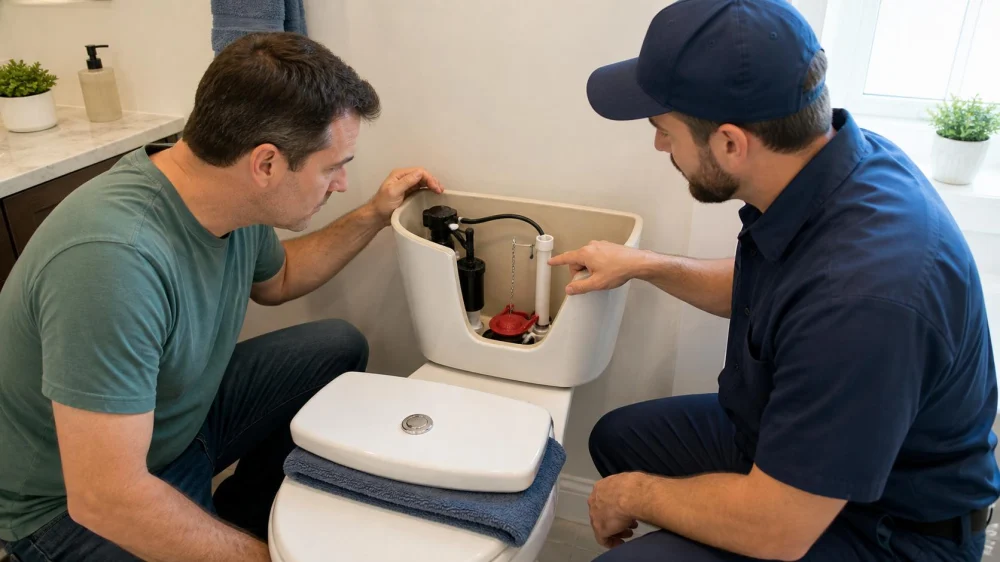
Toilet Keeps Running: Trace the Sound Before Replacing Parts
Table of contents
Quick answer
A toilet that refills by itself or runs continuously may have a leaking flapper, tangled chain, incorrect tank water level, or faulty fill valve. Remove the tank lid carefully, observe without reaching into moving parts, and use a dye test for a silent tank-to-bowl leak. Shut off the fixture and call a plumber if water approaches the tank rim, the valve will not close, or parts are unfamiliar.
Sewer Xpress Corp / pipe xpress inc
Eastampton TownshipBurlington CountyNew Jersey
649 Powell Rd, Eastampton Township, NJ 08060, USA
What “running” can mean
Listen for the pattern. A steady hiss often points to water entering continuously. A short refill every few minutes can mean the tank is slowly losing water into the bowl. Water flowing into the overflow tube suggests a fill-level or fill-valve problem, while a handle that sticks can hold the flapper open.
EPA WaterSense identifies worn flappers as a common source of toilet leaks. The flapper is the seal that releases tank water during a flush and then closes again. It must match the toilet model and seal correctly.
Go Green Plumbing, Heating, Air & Electrical / go green plumbing heating and air
GreensboroGuilford CountyNorth Carolina
300 Pomona Dr, Greensboro, NC 27407, USA
Safe checks in order
- Protect the area. Keep the floor dry, move electrical items away, and place the tank lid on a towel where it cannot fall.
- Observe one flush. Watch whether the chain snags, the flapper closes, and the water stops below the overflow tube.
- Try a dye test. Put a few drops of food colouring in the tank, wait about 10 minutes without flushing, and check whether colour appears in the bowl. Flush promptly afterward to avoid staining.
- Photograph the parts. Record the model information and tank layout before buying anything.
- Use the fixture shutoff if needed. Turn it gently clockwise only if it operates normally; never force a stuck or corroded valve.
If you replace a flapper yourself, follow the toilet manufacturer’s instructions, confirm the correct size and type, and test several flushes while watching for leaks.
When to call a plumber
- water continues rising or spills outside the tank or bowl;
- the fixture shutoff leaks, is seized, or does not stop flow;
- the toilet rocks, the floor is soft, or water appears at the base;
- multiple fixtures gurgle or drain slowly;
- new parts do not stop the leak, or the flush mechanism is unfamiliar;
- the home uses a concealed cistern that requires access-panel work.
Limitations
A dye test detects tank water leaking into the bowl but does not diagnose every fill-valve, supply-line, bowl, seal, or drainage problem. Toilet designs differ. Do not overtighten plastic parts, use improvised chemicals in the tank, or force an old shutoff valve. A plumber may need to isolate the fixture and inspect the full assembly.
FAQ
Can I jiggle the handle and leave it?
That may stop the sound temporarily but does not correct a sticking handle, chain, or seal. Investigate the cause.
Why does the toilet run only at night?
A slow leak may become more noticeable when the house is quiet; supply pressure can also vary. Record the pattern and perform a dye test.
Should I add a cleaning tablet to the tank?
Use only products permitted by the toilet manufacturer. Some in-tank chemicals can affect seals and components.
When should the whole toilet be replaced?
Replacement depends on age, condition, performance, repair access, and cost. A plumber can compare repair with a WaterSense-labelled model.
Sources and evidence notes
- EPA WaterSense: Home Maintenance — dye testing and running-toilet checks.
- EPA WaterSense: Residential Toilets — flapper leaks and efficient replacement context.
Next steps
Listen to the refill pattern, inspect one flush, perform a dye test, and save a photo of the tank parts. If water cannot be controlled safely or the simple cause is unclear, close the fixture shutoff without forcing it and schedule a plumber.
 B & C Plumbing, LLC4.0 (14 reviews)
 Associated Plumbing Company4.0 (127 reviews)
 Quality Plumbing4.0 (15 reviews)
 Theide Plumbing Heating & Hvac3.0 (34 reviews)
 Pipe Works Services, Inc.4.0 (1666 reviews)
 Pennix Plumbing LLC5.0 (5 reviews)
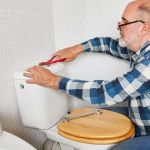 Expert Advice on Installing a New Toilet: A Complete Guide
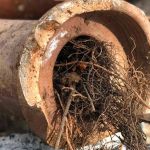 How to Prevent Tree Roots from Damaging Your Sewer Line
 What Is the Average Cost to Install Tankless Water Heater?
 Ultimate Guide to Finding a Reliable Plumber in the U.S.
 How to Fix a Blocked Sewer Line: Tips and Professional Help
 How to Fix a Leaking Pipe Fitting Under Sink: Step-by-Step Guide