
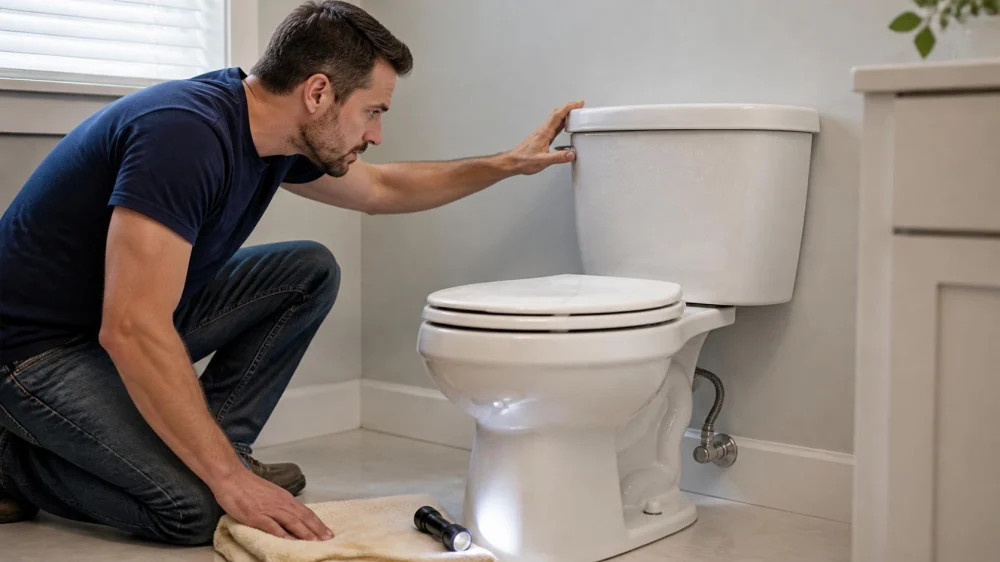
Toilet Tank Sweating: Condensation or a Plumbing Leak?
On this page
Quick answer
A toilet tank can “sweat” when cold refill water cools the porcelain below the bathroom air’s dew point, creating fine moisture over the outer surface. A plumbing leak usually starts at a specific fitting, crack, tank bolt, supply connection, seal, or base. Dry everything, place separate indicators under suspect points, and observe without repeated flushing. Protect the floor and call a plumber for active flow, damage, instability, or an unclear source.
Go Green Plumbing, Heating, Air & Electrical / go green plumbing heating and air
GreensboroGuilford CountyNorth Carolina
300 Pomona Dr, Greensboro, NC 27407, USA
Condensation versus leakage
Condensation often appears broadly on the cold tank, especially after several flushes in warm humid weather or after a shower. Droplets may form high on the exterior and travel downward. It can still damage flooring and encourage damp conditions even though no fitting has failed.
A leak may produce a local drip at the supply valve or hose, under the tank, around bolts, from a crack, or at the base. Water at the floor can travel, so the wettest spot does not always identify the source.

Sewer Xpress Corp / pipe xpress inc
Eastampton TownshipBurlington CountyNew Jersey
649 Powell Rd, Eastampton Township, NJ 08060, USA
Safe diagnostic checks
- Stop using the toilet temporarily. Use another fixture if available and prevent further floor exposure.
- Dry every surface. Wipe the tank, bowl exterior, supply parts, and floor with separate towels.
- Inspect without tightening. Look for cracks, corrosion, loose movement, staining, and droplets at fittings.
- Place indicators. Put dry paper or cloth beneath the supply valve, hose ends, tank bolts, tank-to-bowl joint, and base without blocking access.
- Observe before and after one controlled flush. Note where moisture starts and whether the whole tank fogs.
- Check for running. Listen for repeated refill, because frequent cold-water entry can worsen sweating and signal an internal problem.
- Document the pattern. Photograph timing, humidity conditions, and first wet point for the plumber.
Reduce condensation
Improve bathroom ventilation during and after showers, repair a toilet that runs, and reduce indoor humidity with correctly used ventilation or dehumidification. Keep air moving around the toilet and dry wet floors promptly.
Do not attach improvised insulation, alter fill temperature, or install an anti-sweat system without assessing compatibility, potable-water safety, energy, code, and maintenance. A plumber can discuss insulated tanks or approved mixing solutions when moisture remains severe.
When to call a plumber
- Water flows continuously or reappears at one connection
- Porcelain appears cracked or the tank or bowl moves
- Water emerges at the base or the floor feels soft
- Ceiling below, wall, trim, or subfloor shows damage
- Supply valve does not close safely or begins leaking
- Source remains uncertain after a dry observation
Limitations and safety notes
Do not overtighten porcelain bolts or supply fittings; porcelain can crack and connections can fail. Avoid electrical equipment on a wet bathroom floor. Water contaminated by sewage or a visibly overflowing toilet needs hygiene precautions and professional cleanup.
This article is general guidance. Recurrent floor wetness deserves prompt attention even when condensation seems likely.
Sources and evidence notes
The diagnostic method follows common leak isolation: dry the area, separate likely sources, observe timing, distinguish broad surface moisture from point flow, and avoid adjustments that can create damage. A plumber can pressure-test and inspect hidden components.
Frequently asked questions
Why does the tank sweat more after guests visit?
Repeated flushing introduces more cold water, keeping the tank surface cool while bathroom humidity may be high.
Can a running toilet cause condensation?
It can worsen it by continually replacing water with colder supply water. Running also wastes water and needs diagnosis.
Should I tighten the tank bolts?
Not blindly. Uneven or excessive tightening can crack porcelain. Have the source and correct repair confirmed.
Can condensation damage the floor?
Yes. Repeated moisture can affect finishes and underlying materials, so dry it and address humidity and causes.
Next steps
Stop use long enough to dry the tank, fittings, and floor, then use separate indicators to find where moisture begins. Improve ventilation and check for running, but call a plumber for local flow, cracks, movement, floor damage, or uncertain results.
 G Ritsick & Sons Inc. Mechanical Contractors4.0 (8 reviews)
 O'Connor Plumbing & Heating4.0 (25 reviews)
 Cinch Mechanical4.0 (92 reviews)
 Paige Co Inc3.0 (3 reviews)
 Drain Unclogger4.0 (30 reviews)
 Diamond Plumbing LLC4.0 (14 reviews)
 Beginner's Guide to Replacing Old Pipes | PlumberNear
 How to Replace a Toilet Seal: A Simple DIY Guide
 Water Heater Thermostat Replacement Cost Guide: What Homeowners Should Expect
 Expert Advice on Sewer Line Backups: Prevention and Solutions
 Why Water Heater Tanks Rust and How to Prevent It
 How to Fix a Leaking Pipe Fitting Under Sink: Step-by-Step Guide