
Mastering Your Kitchen Plumbing: Installing a Dishwasher Drain Line
- preparing-your-kitchen - Essential tools and safety precautions
- removing-old-drain-line - Step-by-step removal of existing dishwasher drain
- measuring-and-cutting-hose - How to ensure the perfect fit for your new line
- connecting-to-plumbing - Proper techniques for leak-free installation
- securing-and-testing - Checking connections and ensuring optimal performance
- tips-from-professionals - Insights from experienced plumbers
- common-mistakes-to-avoid - Avoiding costly or damaging errors
Preparing Your Kitchen: Tools and Safety Measures
Before starting, gather essential tools: adjustable wrench, screwdriver, pliers, hose clamps, and a bucket for water drainage. Safety is paramount. Turn off your dishwasher and shut off the water supply to prevent unexpected spills. Laying down a towel or plastic sheet protects your flooring from water damage.
Removing the Old Dishwasher Drain Line
The first step is to carefully disconnect the old drain hose. Check where the hose connects to the dishwasher and the sink drain or garbage disposal. Loosen clamps or fasteners and slowly remove the hose. It's common to encounter residual water, so have your bucket ready. Inspect the old hose for wear or blockages to understand why replacement is necessary.
1. Loosen Hose Clamps
Use a screwdriver or pliers to loosen clamps at both ends. Take your time; forcing the hose can damage the dishwasher inlet or plumbing connection.
2. Remove the Hose Gently
Once clamps are loose, gently twist and pull the hose free. Check inside for any residual debris, as leftover buildup can cause clogs in your new line.
Measuring and Cutting the New Drain Hose
Correct hose length is crucial. Measure the distance between the dishwasher outlet and the sink drain connection, allowing a small curve to prevent kinks. Cut the hose using a sharp utility knife if necessary. A straight and slightly curved hose ensures smooth water flow and prevents backflow.
Connecting the New Dishwasher Drain Line
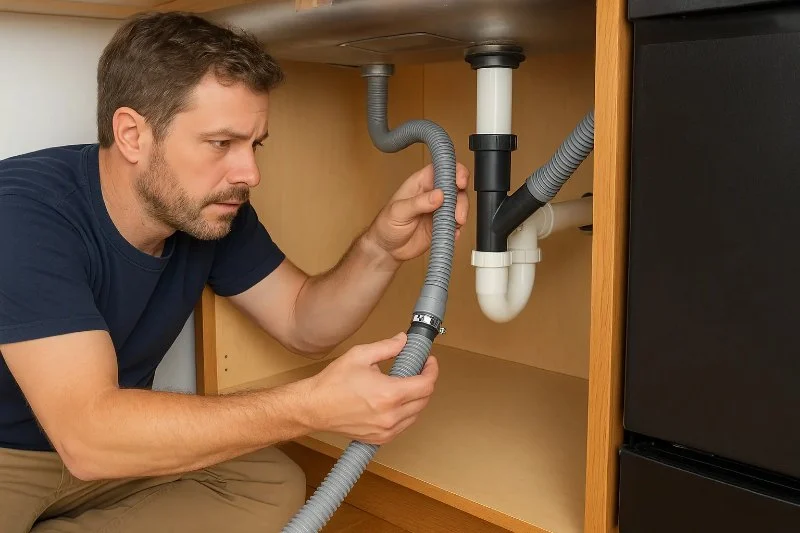
Attach one end of the new drain line to the dishwasher’s drain outlet. Secure it with the provided clamp, ensuring a tight fit. Then, connect the other end to the sink drain or garbage disposal. Ensure the hose rises slightly to form a high loop under the counter—this prevents dirty water from flowing back into the dishwasher.
High Loop Installation
The high loop, typically mounted under the countertop, is essential for proper drainage. Fasten the hose securely with a clamp or bracket. This simple step prevents backflow and keeps your dishwasher running smoothly.
Securing the Line and Testing for Leaks
Double-check all connections before restoring power and water. Run a short cycle with no dishes to observe water flow and ensure there are no leaks. Tighten clamps if needed and watch for any unusual noises that may indicate improper installation.
Leak Prevention Tips
Always use hose clamps at every connection and avoid over-tightening, which can crack fittings. Periodically check the drain line after installation to ensure ongoing leak-free performance.
Tips from Experienced Plumbers
Plumbers often suggest using a flexible, high-quality hose that resists kinks and temperature changes. Keeping the drain line slightly elevated above the dishwasher drain outlet prevents water from stagnating. For homes with garbage disposals, ensure the hose connects to the disposal’s dishwasher inlet properly and that the knockout plug has been removed.
Common Mistakes to Avoid During Installation
One common error is failing to create the high loop, which leads to dishwasher drain backflow. Another is over-tightening clamps or damaging the hose during installation. Taking your time and following proper steps ensures your dishwasher operates efficiently for years.
Why Replacing Your Dishwasher Drain Line Matters
A properly installed drain line prevents leaks, reduces the risk of water damage, and ensures your dishwasher functions efficiently. Many homeowners underestimate the importance of this step, but it can save significant repair costs in the future. If you’re ready to upgrade or replace your drain line, reliable high-quality hoses and installation kits are available online. Explore the latest options and ensure your kitchen plumbing stays in top condition.
 A Sewer Services4.0 (17 reviews)
 Excel Plumbing and heating5.0 (15 reviews)
 Wilbur Henry Plumbing, Heating & AC4.0 (88 reviews)
 SJ Pro Plumbing and Heating4.0 (46 reviews)
 MEP Home Services4.0 (262 reviews)
 Drain Wizard Plumbing and Drain Cleaning4.0 (113 reviews)
 Why Is My Garbage Disposal Humming But Not Working? Troubleshooting Tips
 Preventing Winter Plumbing Issues: Common Causes & Solutions
 How Much Does It Cost to Reduce Your Water Bill in 2025?
 Expert Advice on Low Water Pressure: Causes and Solutions
 How to Fix a Garbage Disposal: Simple Steps for Quick Repairs
 Why Is My Toilet Bubbling When I Run the Sink? Causes and Solutions