
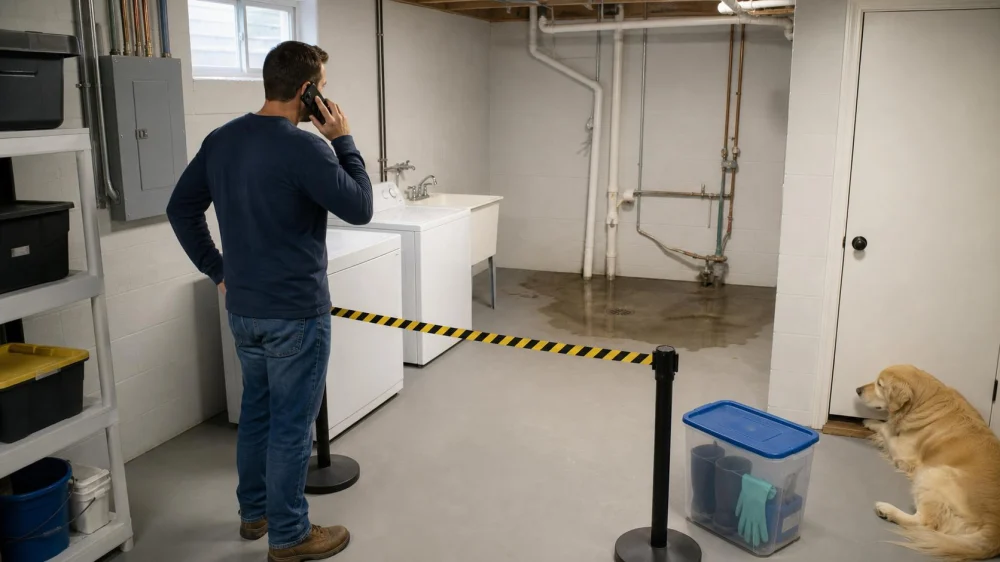
Sewer Backup Warning Signs and What to Do First
On this page
Quick answer
If sewage or dirty drain water backs up, stop using every toilet, sink, shower, dishwasher and washing machine. Keep people and pets away, avoid electrical hazards, ventilate only when safe, and call a licensed plumber or the serving sewer authority. Do not add chemical drain cleaner or keep flushing to test it. Photograph conditions from a safe distance and contact insurance or restoration help promptly.
Bill Trombly Plumbing - Heating - Cooling - Electric / jim trombly heating
ManchesterHillsborough CountyNew Hampshire
76 Maple St, Manchester, NH 03103, USA
What a sewer backup is
A sewer backup occurs when wastewater cannot flow away through the building drain or sewer connection and reverses into a fixture, cleanout or floor drain. The obstruction or overload may be inside one fixture, within the building sewer, at a septic system, or in a public main.
Wastewater can contain microorganisms, chemicals and sharp debris. Treat unknown backup water as contaminated, especially when toilets or multiple drains are involved.
Hardy Plumbing / hardy plumbing
Port ClintonSchuylkill CountyPennsylvania
149 Penn St, Port Clinton, PA 19549, USA
Warning signs
- water rises in a shower, tub or floor drain when a toilet is flushed;
- several fixtures drain slowly at the same time;
- gurgling occurs in one fixture while another appliance drains;
- sewage odour appears near drains, a cleanout, crawlspace or yard;
- the lowest plumbing fixture backs up repeatedly;
- a cleanout cap leaks or the surrounding soil becomes unusually wet;
- neighbours report similar problems, especially during heavy rain;
- a septic alarm sounds or the drain field shows surfacing wastewater.
One slow sink may be a local trap or branch issue. Multiple affected fixtures or a reaction between fixtures suggests a larger restriction and deserves prompt diagnosis.
First actions
- Stop all water use in the building and tell every occupant.
- Keep children, pets and unprotected people out of the affected area.
- Do not enter standing water near outlets, appliances or the electrical panel. Call emergency professionals when power isolation is unsafe.
- Do not flush, run a tap, operate appliances or pour chemicals into drains.
- Close doors or set a clean-area barrier without spreading contaminated water through the home.
- Call a licensed plumber, sewer authority or septic professional based on the system.
- Notify the insurer and qualified water-damage restoration service when building materials or contents are affected.
Work out the likely scope
From a safe, dry area, note which fixtures are affected, the lowest backup point, when it began, recent water use, weather, and whether nearby properties have problems. Identify whether the home uses municipal sewer or a private septic system.
Do not remove a cleanout cap under pressure. Wastewater may discharge forcefully. A plumber can select inspection, cable, jetting, camera or excavation methods after locating the problem and assessing pipe condition.
Who to call
- Licensed plumber: For building drains, the private sewer lateral, cleanout access and internal diagnosis.
- Municipal sewer provider: When several properties are affected, a public main is suspected or the plumber asks for a main check.
- Septic professional: For alarms, full tanks, drain-field symptoms or private system problems.
- Restoration contractor: For contaminated-water extraction, removal, cleaning, drying and moisture verification.
- Insurance company: For reporting requirements, coverage questions and documentation.
- Emergency services or utility: For electrical, structural, gas or immediate life-safety hazards.
Cleanup and documentation
Photograph the source area, water extent and damaged materials without walking through contamination. Record calls, arrival times, findings, invoices and disposal decisions. Do not discard major items before the insurer provides instructions unless they create an immediate safety hazard.
Porous materials exposed to sewage may require removal rather than surface cleaning. Qualified restoration professionals should use suitable protective equipment, containment, cleaning and drying verification. Laundering or disinfecting decisions depend on material, exposure and local health guidance.
Prevention checklist
- Know whether the property uses sewer or septic and who owns each section.
- Locate accessible cleanouts and keep them clear without opening them casually.
- Do not flush wipes, hygiene products, grease or other unsuitable material.
- Maintain septic pumping and inspection on a professional schedule.
- Have recurring slow drains or root-prone lines professionally evaluated.
- Confirm downspouts and sump discharge connect only where permitted.
- Ask a plumber whether a backwater valve is appropriate and code-compliant for the property.
- Review sewer-backup insurance coverage before an incident.
Limitations and important notes
This guide cannot identify the blockage location or responsibility boundary. Boone-area municipal, private, shared and septic systems differ, and steep sites or heavy rain can complicate diagnosis. Contact the actual provider and a licensed North Carolina plumber.
Never mix drain products, bleach, acids or other chemicals. Tell responders about any product already used. Fumes and reactions can injure occupants and workers.
Frequently asked questions
Should I shut off the main water valve?
Stopping all fixture use may be enough, but shutting the main can prevent accidental use. Do so only if the valve is known, safe and operable; it will not remove wastewater already in the drain system.
Can I use a plunger?
A plunger may suit an isolated toilet clog without wider signs. Do not plunge when multiple fixtures back up, chemicals are present or contaminated water could splash.
Is the city responsible for every sewer backup?
No. Responsibility depends on the failure location, ownership, local rules and cause. Ask the sewer provider and plumber to document findings.
Can I clean sewage with household bleach?
Do not assume bleach alone makes affected materials safe. Contaminated-water restoration requires source control, removal, cleaning, drying and suitable protection.
Why does the basement drain back up first?
It may be the lowest open point in the drainage system, so rising wastewater emerges there before higher fixtures.
Sources and evidence notes
This guide reflects common plumbing, contaminated-water and emergency-safety practice: stop adding water, isolate the area, avoid electrical exposure and chemical mixing, determine whether the fault is private or public, and use qualified plumbing and restoration services. Local sewer authority rules, public-health guidance and property-specific professional findings take priority.
Next steps
Identify the sewer or septic provider, locate the cleanout without opening it, save a licensed plumber's number and review insurance coverage. If warning signs are already present, stop testing fixtures and arrange diagnosis before wastewater reaches living space.
 Empire State Plumbing4.0 (381 reviews)
 Actfast Solutions LLC: Superior Plumbing and Drain Services5.0 (29 reviews)
 RMD Plumbing4.0 (8 reviews)
 Lepore Plumbing & Heating5.0 (5 reviews)
 Aqualogic Inc5.0 (2 reviews)
 PUZO Plumbing & Drain LLC5.0 (76 reviews)
 Best Ways to Fix a Leaking Faucet
 How Much Does It Cost to Replacing Old Pipes in Your Home?
 DIY Fixes for a Broken Water Heater
 How to Fix and Unclog a Bathtub Drain Like a Pro
 Beginner's Guide to a Broken Water Heater: What You Need to Know
 How to Install a New Bathroom Plumbing Rough-In Guide