
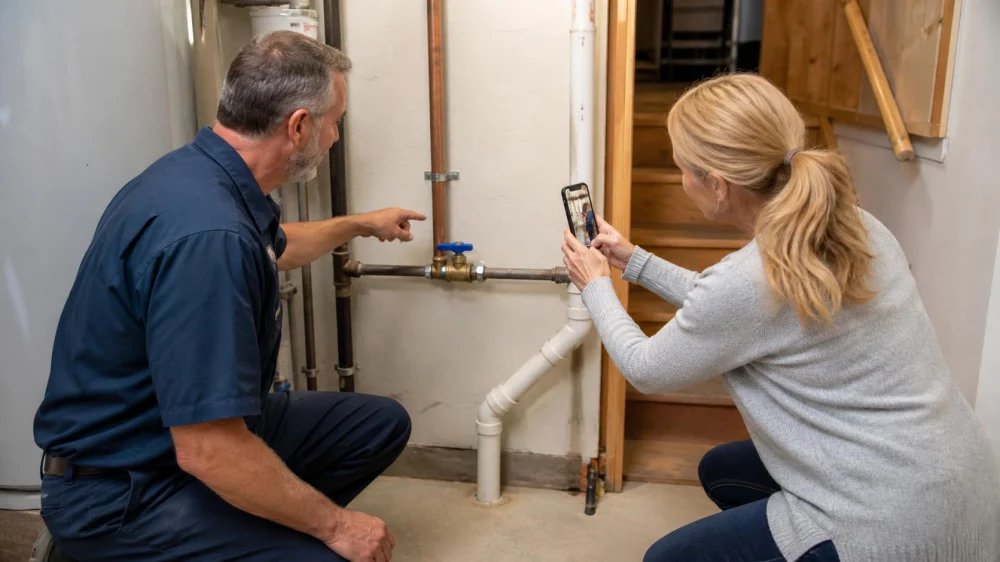
Main Water Shutoff: Locate, Label, and Test It Safely
On this page
Quick answer
Find the valve that controls water entering the home, confirm it with plumbing records or a qualified Boone plumber, and keep the route clear. Label its location and photograph it for household members. Do not force, wrench, or casually test a corroded, leaking, buried, shared, or unfamiliar valve. Arrange a controlled test when someone can monitor fixtures and the valve can be reopened gradually without creating a pressure surge.
Sewer Xpress Corp / pipe xpress inc
Eastampton TownshipBurlington CountyNew Jersey
649 Powell Rd, Eastampton Township, NJ 08060, USA
Locate the correct valve
The main shutoff may be where the service line enters a basement, crawlspace, garage, utility room, or exterior wall. Climate, construction, private wells, and renovations change layouts. A curb or meter valve may belong to the utility and require special tools or permission.
Trace the cold-water service from the meter or well equipment when safely accessible. Do not confuse the house main with valves for a water heater, irrigation system, appliance, or individual branch.
Mike the Plumber / mike the plumber
1545 Ocean Ave A3, Bohemia, NY 11716, USA
Inspect before touching
- Valve and pipe are accessible without climbing over hazards
- No active drip, mineral buildup, severe corrosion, crack, or distorted handle
- Pipe is supported and will not twist when the handle moves
- Area is not beside exposed electrical hazards
- Valve type and normal operating direction are understood
- Well pump, treatment, fire-sprinkler, boiler, or other connected-system implications are known
Stop and call a plumber if the valve condition is uncertain. An old gate valve can fail internally, and forcing a seized valve can turn preparation into a leak.
Plan a controlled test
- Choose normal business hours. Have a plumber or utility contact available if the valve will not reopen or begins leaking.
- Protect equipment. Follow instructions for water heaters, pumps, filters, and other systems affected by loss of supply.
- Notify occupants. Stop appliances and avoid flushing or drawing water during the test.
- Operate by hand only. Move the handle according to its design without extensions or a wrench unless a professional directs it.
- Verify shutoff. Open a suitable fixture to check that flow falls as expected; trapped water may continue briefly.
- Inspect for leakage. Watch the stem, body, joints, and nearby piping.
- Reopen slowly. Restore service gradually and check fixtures and systems for normal operation and leaks.
Emergency shutoff plan
Post a simple location map where household members can find it without exposing security information publicly. Keep a flashlight and plumber contact accessible. Teach capable adults how the valve works only after it has been professionally verified.
During a major leak, first protect life: avoid water contacting electricity, unstable ceilings, sewage, or structural hazards. Shut off water only when access is safe, then contact the plumber, utility, insurer, or emergency services as appropriate.
Limitations and safety notes
This article cannot identify ownership or valve type. Boone-area homes may have freezing, well, crawlspace, or shared-service considerations. Do not operate a street valve, fire-protection valve, or unfamiliar system without authorization.
Sources and evidence notes
The plan reflects common plumbing emergency preparation: verify the controlling valve, assess condition, keep access clear, test under controlled conditions, reopen slowly, and repair unreliable shutoffs before an emergency. Local utility and plumber guidance controls specific systems.
Frequently asked questions
Should I turn the main valve every year?
Testing frequency depends on valve type and condition. Ask a plumber for a maintenance interval and do not operate a questionable valve.
What if the valve will not close fully?
Do not force it. Arrange repair or replacement so the home has a reliable emergency shutoff.
Can I use the water-meter valve?
It may be utility property and require permission or tools. Contact the local utility before operating it.
Why reopen slowly?
Gradual restoration limits sudden pressure changes and gives you time to watch for leakage or abnormal system behaviour.
Next steps
Locate the likely valve, photograph and clear access, then have its identity and condition confirmed. Schedule a controlled test and repair an unreliable valve before you need it. Share the safe emergency plan with the household.
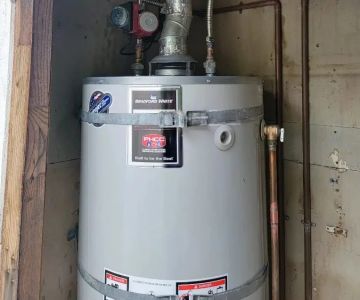
 G Ritsick & Sons Inc. Mechanical Contractors4.0 (8 reviews)
 O'Connor Plumbing & Heating4.0 (25 reviews)
 Cinch Mechanical4.0 (92 reviews)
 Paige Co Inc3.0 (3 reviews)
 Drain Unclogger4.0 (30 reviews)
 Diamond Plumbing LLC4.0 (14 reviews)
 Beginner's Guide to Replacing Old Pipes | PlumberNear
 How to Replace a Toilet Seal: A Simple DIY Guide
 Water Heater Thermostat Replacement Cost Guide: What Homeowners Should Expect
 Expert Advice on Sewer Line Backups: Prevention and Solutions
 Why Water Heater Tanks Rust and How to Prevent It
 How to Fix a Leaking Pipe Fitting Under Sink: Step-by-Step Guide