
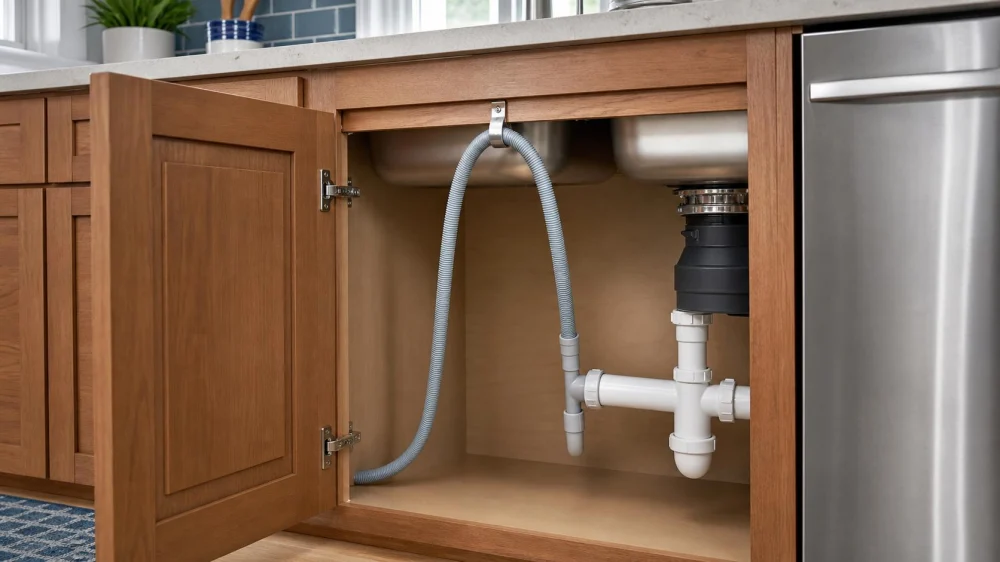
Why a Dishwasher Drain Hose Needs a High Loop
On this page
- Quick answer
- What a dishwasher high loop is
- Why drain-hose routing matters
- High loop versus countertop air gap
- Dishwasher drain-hose inspection checklist
- Warning signs the drain setup needs attention
- When to call a plumber or appliance technician
- Limitations and evidence notes
- Frequently asked questions
- Conclusion and next steps
Quick answer
A dishwasher high loop raises the drain hose close to the underside of the countertop before it connects to the sink drain or garbage disposal. This routing helps reduce dirty sink water flowing back toward the dishwasher. It must be secured, unkinked, and installed according to the dishwasher manual and local plumbing rules; some locations require a separate countertop air gap instead.
JetBlast Inc. Water Blasting Sewer & Drain Cleaning / jet blast drain cleaning
BaltimoreAnne Arundel CountyMaryland
6800 Fort Smallwood Rd, Baltimore, MD 21226, USA
What a dishwasher high loop is
A dishwasher high loop is the elevated section of flexible drain hose under the kitchen counter. The hose normally leaves the dishwasher, rises as high as the approved installation allows, is fastened securely, and then drops to its connection at a sink tailpiece or garbage disposal inlet.
The high point is intentional. It creates an uphill path between the sink drainage connection and the dishwasher. That arrangement can make unwanted reverse flow less likely during ordinary sink use, although it is not the same as a visible, atmospheric air-gap fitting.
This article is for homeowners, tenants, and property managers inspecting a typical residential installation. It does not replace the appliance installation guide, a local plumbing inspection, or professional diagnosis of wastewater backups.
Go Green Plumbing, Heating, Air & Electrical / go green plumbing heating and air
GreensboroGuilford CountyNorth Carolina
300 Pomona Dr, Greensboro, NC 27407, USA
Why drain-hose routing matters
Dishwasher wastewater carries food particles, detergent, and soil away from the wash chamber. After the drain pump stops, the hose and connected piping still influence where water can move. A hose that lies low across the cabinet may provide an easier route for water from a backed-up sink or disposal connection to travel toward the appliance.
Correct elevation and support also protect the hose from cabinet-floor damage. A properly routed line is easier to inspect and less likely to be crushed by stored supplies. The goal is not to pull the hose tight; it needs a smooth path without sharp bends, abrasion, heat exposure, or tension at either fitting.
A high loop cannot correct every drainage problem. It will not clear a clogged trap, repair a failing dishwasher pump, seal a loose clamp, or prevent all backflow during a serious drain backup. Think of it as one part of a complete, code-compliant drainage arrangement.
High loop versus countertop air gap
A high loop and an air gap address related concerns but work differently:
- High loop: The hose rises under the counter and remains a continuous closed line. It is simple and hidden inside the cabinet.
- Air gap: A small fitting sits above the sink or countertop and creates a physical separation in the drain path. One hose runs from the dishwasher to the air gap and another runs from the air gap to the disposal or drain connection.
An air gap generally provides stronger protection against backsiphonage because of that physical separation. Whether a high loop alone is accepted depends on the appliance instructions and the plumbing rules that apply to the property. Do not remove or bypass an existing air gap merely because the hose also has a high section.
For a home in Boone, North Carolina, confirm requirements with the current appliance manual and the authority responsible for local plumbing compliance. Do not assume an installation seen in another state or online is acceptable for the property.
Dishwasher drain-hose inspection checklist
Use this visual check before deciding whether anything should be changed:
- Make the area safe. Stop the dishwasher, switch off its confirmed circuit or unplug it if the dry receptacle is safely accessible, and let hot water cool. Do not work around standing water and energized wiring.
- Clear the cabinet carefully. Remove stored items without pulling on plumbing or electrical cords. Use a flashlight rather than reaching behind equipment blindly.
- Trace the full hose. Follow it from the dishwasher opening to the drain connection. Confirm you are looking at the dishwasher drain hose rather than a supply line.
- Find the high point. The hose should rise near the underside of the counter or to the location specified in the installation guide before descending to the connection.
- Check the support. The loop should be held by a proper bracket or strap. It should not depend on a temporary knot, tape that is peeling away, or stored objects.
- Look for damage. Check for kinks, flattened sections, brittle material, cuts, rubbing points, heat exposure, bulges, discoloration, and signs of leakage.
- Inspect the connection. The hose should fit the disposal inlet or approved branch tailpiece with the correct clamp. Watch for corrosion, drips, or a connection placed at an unsuitable point.
- Check a disposal replacement detail. If a dishwasher was connected to a newly installed garbage disposal and never drains correctly, the disposal's dishwasher-inlet knockout may not have been removed. Confirm this through the disposal instructions or have a professional inspect it.
- Identify any air gap. If one is installed, keep both hoses routed as the air-gap and dishwasher manufacturers require. Water emerging from the air gap often signals a downstream restriction that needs attention.
- Document before changing anything. Photograph the routing, model label, connection, clamp, and any leakage. This helps a technician assess the setup without guessing.
Do not move the hose if the routing is hidden, the cabinet is wet, fittings are corroded, or access requires pulling out a hardwired appliance. A visual inspection is enough to decide that professional help is appropriate.
Warning signs the drain setup needs attention
- Dirty or foul-smelling water remains in the dishwasher after a cycle.
- Water appears in the dishwasher after the sink or garbage disposal is used.
- The dishwasher drains slowly, stops with a drain error, or runs its pump for an unusual length of time.
- Water leaks under the sink during the drain portion of a cycle.
- The hose lies on the cabinet floor, has no secured high point, or is visibly kinked.
- Water discharges from a countertop air gap.
- The sink backs up, gurgles, or drains slowly at the same time.
These signs do not all prove that the high loop is wrong. A blocked filter, clogged hose, restricted sink drain, disposal obstruction, failing pump, damaged check valve, or incorrect connection can create similar symptoms. Diagnose the whole drain path rather than raising the hose and assuming the problem is solved.
When to call a plumber or appliance technician
A plumber is usually the best first call when the sink also drains slowly, wastewater backs up, the trap or branch drain may be restricted, the disposal connection leaks, or the installation may not meet plumbing requirements. A plumber can evaluate the shared drainage path and correct approved fittings and hose routing.
An appliance technician may be better when the sink drains normally but the dishwasher shows drain errors, the pump sounds abnormal, water remains after cleaning the accessible filter, or an internal valve or pump may have failed. If electrical wiring, a hot receptacle, repeated breaker trips, or damaged insulation is involved, use a licensed electrician.
Stop using the dishwasher and seek prompt help if wastewater repeatedly enters the appliance, water reaches electrical components, the cabinet floor swells, or a leak continues with the appliance off. Ongoing moisture can damage cabinetry and conceal a larger plumbing problem.
Limitations and evidence notes
This guidance is based on common residential dishwasher installation practice and broad manufacturer instructions for elevating and securing drain hoses. Exact minimum and maximum hose heights, allowed connection methods, clamp types, air-gap requirements, and extension limits vary by model and jurisdiction. The installation manual for the exact dishwasher and current local rules are the controlling references.
A visual check cannot confirm internal pump condition, hose blockage, correct pressure performance, code compliance behind finished surfaces, or the sanitary condition of hidden piping. Do not invent an elevation measurement from a generic diagram. Measure only against the dimensions stated for the specific appliance and installation.
Frequently asked questions
How high should a dishwasher drain hose loop be?
Raise and secure it to the height and location specified by the dishwasher manufacturer and permitted by local plumbing rules. Many manuals call for routing near the underside of the counter, but exact dimensions vary. Use the model number to find the correct installation guide rather than relying on a universal number.
Can a high loop stop all dirty water from entering the dishwasher?
No. It can reduce the chance of ordinary reverse flow, but a severe sink backup, incorrect connection, internal valve problem, or blocked drainage system can still cause trouble. Some jurisdictions require an air gap for stronger separation.
Does the hose connect before or after the sink trap?
The approved dishwasher branch connection is generally on the sink side of the trap, using a disposal inlet or suitable branch tailpiece. Connecting in the wrong place can expose the appliance to sewer gas or improper drainage. Follow the local code and have a plumber correct an uncertain setup.
Why is water coming out of the countertop air gap?
The air gap is releasing water because flow toward the disposal or drain is restricted, a downstream hose is kinked, or the connection is obstructed. Turn the dishwasher off and inspect only accessible, safe components. Persistent discharge needs cleaning or professional diagnosis of the downstream path.
Can I tape the drain hose to hold the loop?
Tape can loosen with heat, moisture, and age. Use the manufacturer-approved bracket, clip, or a suitable secure support that will not crush or cut the hose. Keep the loop smooth and leave connections free of strain.
Conclusion and next steps
Open the sink cabinet and confirm that the dishwasher drain hose rises to a securely supported high point, remains smooth, and connects without leaks. Keep an existing air gap in place, compare the routing with the exact appliance manual, and treat slow sink drainage or wastewater backflow as a system problem. When the setup is uncertain, document it and ask the appropriate local professional to correct it.
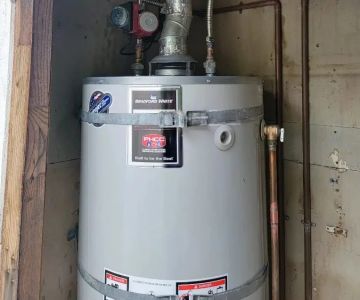
 Village Plumbing and Heating2.0 (39 reviews)
 Plumbing hvac landscaping painting power washing backhoe0.0 (0 reviews)
 FIX-A-LEAK Plumbing & Heating Inc.4.0 (613 reviews)
 Pipe Doctor Plumbing Heating5.0 (3 reviews)
 Robert L. Gray Co., Inc. Plumbing & Heating4.0 (14 reviews)
 Todd Brothers Plumbing4.0 (56 reviews)
 Beginner's Guide to Replacing Old Pipes | PlumberNear
 What Causes Preventing Winter Plumbing Issues
 Avoid These Mistakes When Clogged Drains: Expert Tips for Homeowners
 How to Reduce Your Water Bill - Save Money and Conserve Water
 How to Fix a Leaking PEX Pipe Connection Step-by-Step Guide
 How to Fix a Leaking Outdoor Water Line: Step-by-Step Repair Guide