
Water Heater Drain Pan: Inspect the Pan and Drain Line
On this page
Quick answer
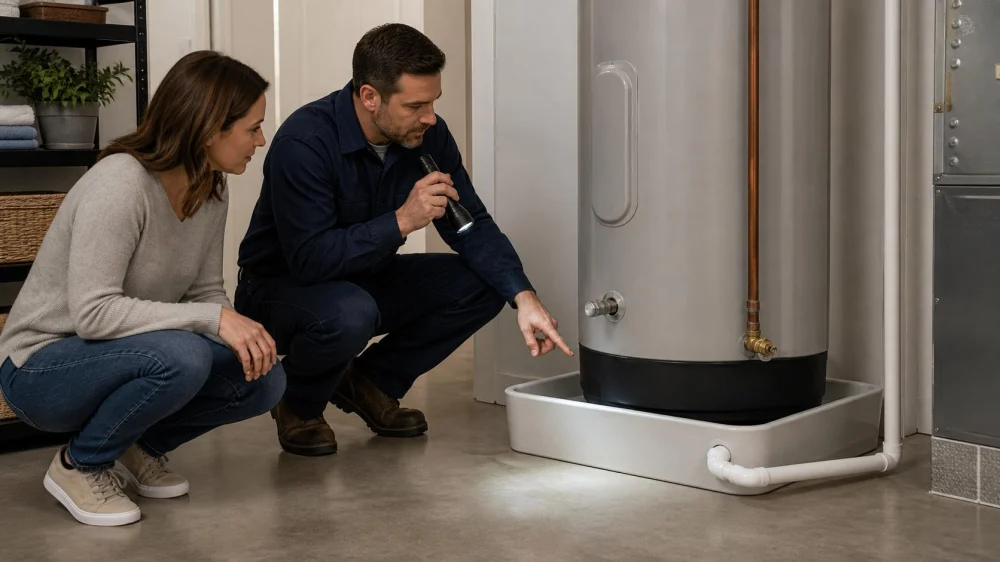
Inspect a water heater drain pan with good light but without touching hot, electrical, gas, or relief components. The pan should be intact, dry, correctly sized, and connected to an unobstructed drain route where required. Water in the pan is a warning, not normal storage. Identify whether it comes from the tank, fittings, condensation, or nearby equipment, shut off utilities only under safe manufacturer instructions, and call a qualified plumber for active leakage or damage.
A water heater drain pan is a shallow corrosion-resistant tray intended to collect limited leakage and direct it toward an approved drain location. It does not prevent a tank rupture or replace maintenance.

Stashluk Mechanical Contractors Inc. / stashluk
Franklin TownshipHunterdon CountyNew Jersey
998 Croton Rd, Pittstown, NJ 08867, USA
What the pan does
- catches minor leakage beneath the heater;
- routes water away from finished floors when properly drained;
- makes small leaks easier to notice;
- may be required by local code depending on location and installation.
Requirements in Boone, North Carolina, and elsewhere can depend on current codes, heater type, building, and placement. A licensed local plumber or code authority should confirm compliance.

Mike the Plumber / mike the plumber
1545 Ocean Ave A3, Bohemia, NY 11716, USA
Safe inspection
- Keep children and pets away and ensure a dry walking surface.
- Use a flashlight; do not reach behind hot or energised equipment.
- Look for cracks, rust, deformation, missing drain connection, debris, and staining.
- Check whether the heater is centred without crushing the pan.
- Observe nearby valves and pipes for droplets or mineral trails.
- Note water level, colour, smell, and whether it is increasing.
Do not move a filled heater, test the relief valve casually, or probe wiring, burners, vents, or gas connections.
If you find water
Keep clear of electrical equipment and wet floors. If there is rapid flow, ceiling damage, gas smell, hissing, smoke, or electrical arcing, leave the area and use emergency utility or professional help. Do not operate switches in a suspected gas leak.
For a small leak, photograph the pan and visible source, note meter activity and recent appliance use, and contact a plumber. Do not assume drying the pan fixes the cause.
Check the drain route
Visually follow the pan outlet where accessible. It should not be capped, kinked, crushed, uphill, or terminated where discharge causes damage or a slip hazard. Do not snake, blow, or chemically treat the line without knowing its material and destination.
A pan drain is different from the temperature-and-pressure relief discharge pipe. Never connect, cap, or combine these lines improperly.
When to call a plumber
- any active tank or connection leak;
- rusted or cracked pan;
- blocked, missing, or poorly routed drain;
- repeated water with unknown source;
- heater instability, corrosion, noise, or age concerns;
- installation in finished, attic, or upper-floor space.
Choose a qualified local service with clear contact details, licensing where required, written scope, and emergency procedures.
Important notes
This is general home-maintenance information, not plumbing, gas, electrical, or code advice. Water heaters can cause scalding, shock, fire, explosion, and carbon monoxide risk. Follow manufacturer instructions and local requirements.
Evidence notes
The checklist reflects common plumbing practice: keep the pan visible, dry, intact, sized and drained appropriately; treat water as a symptom; and separate pan drainage from relief discharge. The manufacturer, licensed plumber, and local authority are primary sources.
FAQ
Is a little water in the pan normal?
No. It should be investigated even if the source is condensation.
Can I plug the drain to find a leak?
No. Blocking drainage can increase damage.
Can I replace the pan myself?
It often requires disconnecting and moving a heavy heater, which involves serious hazards and code requirements.
Why is the pan rusty?
Past moisture, incompatible materials, or corrosion may be involved. Replace or inspect before it fails.
Does a pan protect against a burst tank?
No. Its capacity is limited. Leak detection and correct installation provide additional protection.
Next steps
Use a flashlight to confirm the pan is dry, intact, and connected to a clear approved route. Photograph any water or staining and call a qualified plumber. For rapid leakage, gas, smoke, or electrical danger, leave the area and seek emergency assistance.
 Marino Plumbing & Heating4.0 (10 reviews)
 Mr Plumber3.0 (46 reviews)
 A1 Discount Plumber Attleboro4.0 (47 reviews)
 Connection Plumbing & Heating LLC5.0 (4 reviews)
 Zimmerman's Electrical & Plumbing, Inc.3.0 (21 reviews)
 Tandem Mechanical Inc.4.0 (27 reviews)
 DIY Fixes for Choosing the Right Pipe Materials for Home Plumbing
 How to Replace a Broken Showerhead: Simple Repair Guide
 Beginner's Guide to Water Damage in Your Bathroom
 How Long Does It Take to Sump Pump Failure: Causes and Solutions
 How to Replace a Shower Drain Gasket
 Top Tips for a Broken Water Heater | Troubleshooting & Repair Solutions