
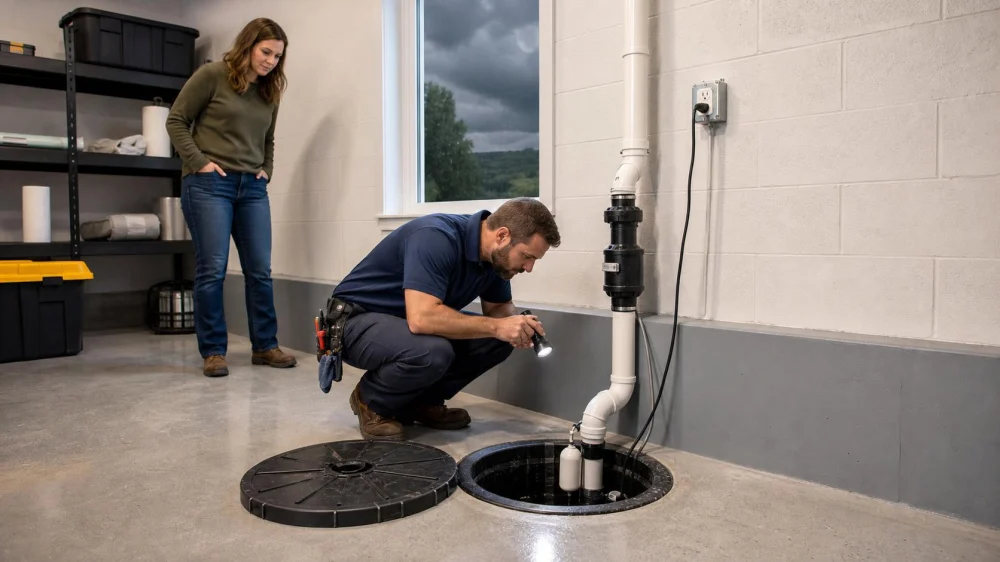
Sump Pump Test: Check It Before Heavy Rain Arrives
On this page
Quick answer
Before heavy rain, read the sump pump manual, keep the area dry, inspect the pit, power connection, float, check valve, and discharge line, then test the pump using the manufacturer-approved method. Confirm that it starts, removes water, stops normally, and sends water to the intended outlet. Stop for damaged wiring, sparks, overheating, a jammed float, repeated cycling, or water near electrical equipment.
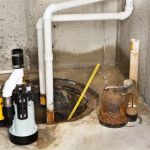
A sump pump system collects groundwater in a basin and moves it away from a building before the water level reaches the basement or crawlspace. The system may include a primary pump, float switch, check valve, discharge pipe, cover, alarm, battery backup, and exterior outlet. Each part can affect reliability.

Stashluk Mechanical Contractors Inc. / stashluk
Franklin TownshipHunterdon CountyNew Jersey
998 Croton Rd, Pittstown, NJ 08867, USA
Know what the system includes
Locate the basin and trace only the visible discharge route. Identify the pump make and model, rated use, power source, alarm, backup, and last service date. Keep manuals and plumber contacts where they remain available during an outage.
Some pumps are submersible inside the pit; pedestal pumps have the motor above it. Switches may be tethered, vertical, electronic, or integrated. A test that is safe for one design may damage another, so use the exact instructions.
A sump pump handles water reaching the basin; it does not repair foundation cracks, replace exterior drainage, or guarantee a dry basement during every storm.
JetBlast Inc. Water Blasting Sewer & Drain Cleaning / jet blast drain cleaning
BaltimoreAnne Arundel CountyMaryland
6800 Fort Smallwood Rd, Baltimore, MD 21226, USA
Start with a dry visual check
- Protect the work area. Keep hands and floor dry, use good lighting, and keep children and pets away from the open basin.
- Check power without dismantling. Confirm the cord is intact and connected to the intended grounded receptacle. Do not use an extension cord or defeat a ground-fault device.
- Inspect the pit. Look for debris, sediment, a displaced cover, or objects that can block the float. Do not reach into water while the pump is energised.
- View the float path. It should have space to move without touching pipe, wall, cord, or cover.
- Inspect visible pipework. Look for loose joints, cracks, stains, corrosion, missing support, and evidence of backflow.
- Check the exterior outlet. It should be visible, open, and not buried by vegetation, soil, snow, or stored items.
Run a controlled test
If the manufacturer permits a water test, slowly add clean water to the basin from a safe position until the float calls for pumping. Do not overfill, pour onto electrical components, or run a pump dry. An alternative switch test may be specified for some models.
Observe four events:
- Start: the pump activates at the expected water level without manual nudging.
- Flow: water level falls steadily and the pipe does not leak or shake excessively.
- Stop: the pump turns off before running dry and does not immediately restart.
- Drain-back: a small amount may return depending on design, but large backflow or rapid cycling can indicate a valve or piping problem.
Listen for grinding, rattling, humming without flow, or unusually loud vibration. Note the test duration and outcome for the plumber; do not keep repeating a failed test.
Inspect the discharge path
During the test, have another adult observe the exterior outlet from a safe location if practical. Water should leave freely without spraying a damaged joint or returning immediately toward the foundation.
Discharge rules vary by property and local authority. Do not connect a sump pump to a sanitary sewer, street, neighbour's property, or other drainage system without confirming that it is lawful and approved. Frozen or buried lines may require professional correction.
A line needs adequate support and slope for its design. Do not drill, reroute, or add a restrictive hose without checking pump instructions and local plumbing requirements.
Check backup power and alarms
A primary electric pump may stop during the same storm that causes a power failure. If the home has a battery backup, water-powered backup, generator connection, or high-water alarm, test it under its own instructions and maintenance schedule.
- Check battery date, terminals, fluid level when applicable, charger status, and self-test indicators.
- Confirm the alarm can be heard in occupied areas and that remote alerts reach the intended phone.
- Never operate a portable generator indoors, in a garage, or near openings; follow generator and carbon-monoxide safety guidance.
- A water-powered backup can affect water use and may require backflow protection and local approval.
Pre-rain sump pump checklist
- Manual, model, service history, and emergency contacts are available.
- Basin, cover, float, cord, receptacle, pipe, valve, and outlet are visible and intact.
- Floor and hands remain dry around electrical components.
- Pump starts, moves water, stops, and does not short-cycle.
- Exterior discharge is open and directs water to an approved location.
- Alarm and backup are tested under their instructions.
- Valuables are raised and the basement response plan is current.
- A plumber is scheduled for any abnormal sound, leak, warning, or failed test.
Limitations and service triggers
Do not touch a pump, plug, receptacle, extension, or standing water when electrical safety is uncertain. Leave the area and contact emergency services or a qualified electrician when there is sparking, smoke, burning odour, a hot outlet, shock sensation, or water reaching electrical equipment.
Call a plumber for a pump that will not start or stop, hums without moving water, trips protection repeatedly, leaks, short-cycles, has a blocked or frozen discharge, or cannot keep up with inflow. A rising basin during a failed test needs prompt action.
Boone-area rainfall, terrain, groundwater, codes, and building design vary. A local licensed professional should assess pump capacity, drainage, discharge legality, and backup design for the property.
Sources and evidence notes
The guidance follows common sump-pump maintenance practice: inspect before storms, keep floats and inlets clear, test start-flow-stop behaviour, verify discharge, and separate plumbing work from electrical hazards.
Use the pump, switch, alarm, battery, and generator manuals; local plumbing and stormwater requirements; electrical safety guidance; and qualified plumber or electrician advice as primary sources.
Frequently asked questions
How often should a sump pump be tested?
Follow the manufacturer and service professional. A practical trigger is before a wet season, forecast heavy rain, or leaving the property, plus the stated maintenance interval.
Can I lift the float by hand?
Only if the exact manual permits it and the area is dry and safe. Forcing a tether or reaching into a powered pit can cause damage or injury. A controlled water test is common but not universal.
Why does the pump run every few minutes?
High inflow, a failed check valve, short discharge cycle, stuck switch, undersized basin, or drainage problem may contribute. Arrange diagnosis rather than assuming frequent operation is normal.
Should the pit have a cover?
Many systems use a secure fitted cover to reduce debris, moisture, and hazards; radon-control systems may need sealed details. Follow the building and system design rather than improvising a lid.
Will a battery backup prevent all flooding?
No. Battery capacity, pump capacity, maintenance, storm duration, blockage, and inflow all matter. It adds resilience but does not guarantee protection.
Conclusion and next steps
Find the manual, clear the area without entering the pit, inspect the visible system, and run one approved controlled test. Confirm the outlet and backup, then document the result. Repair abnormal operation before the forecast deteriorates rather than relying on the pump to recover during a storm.
 Anthony & Sons Plumbing4.0 (117 reviews)
 Drain Medic4.0 (58 reviews)
 Barretta & Sons Inc5.0 (7 reviews)
 All Star Rooter4.0 (47 reviews)
 KenCo Environmental LLC5.0 (30 reviews)
 Roto-Rooter Plumbing & Water Cleanup4.0 (1137 reviews)
 Expert Advice on Understanding Plumbing Codes: Essential Tips for Homeowners and Contractors
 How to Deal with Common Plumbing Problems in Your Kitchen
 What Causes Sump Pump Failure? | Preventive Tips and Maintenance
 How to Fix a Leaking Shower Valve Body: A Step-by-Step Guide
 How to Prevent Common Plumbing Issues in Older Homes
 What Causes Slab Leak Under House?