
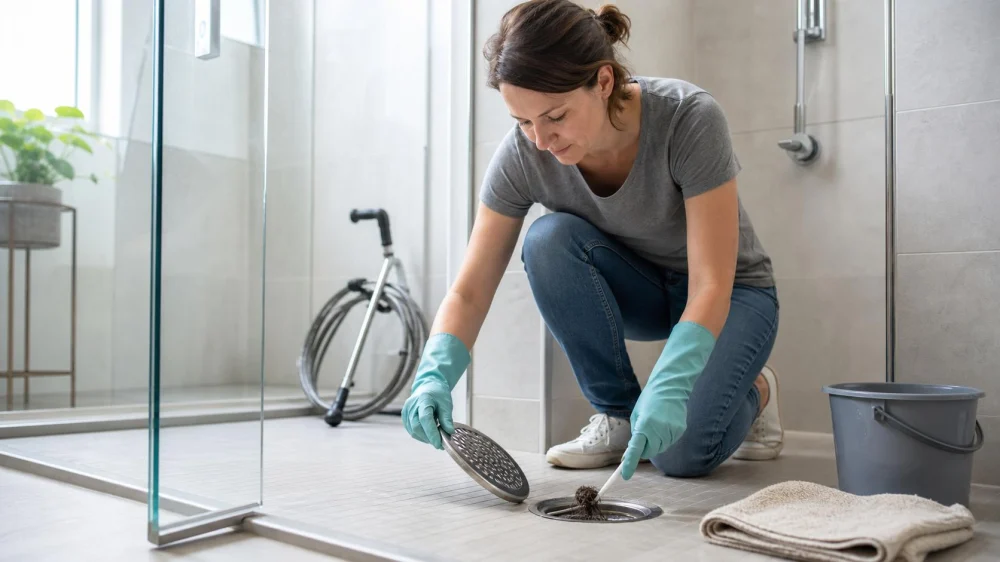
Slow Shower Drain: Clear Debris Before Using Chemicals
Quick answer: Stop using the shower if water is backing up or spilling. Remove visible hair from a removable strainer, clean the cover, and test with a small amount of water. If the drain stays slow, use a suitable hand tool or call a plumber. Never mix drain cleaners, and always tell the plumber if any chemical has already entered the drain.
A gradual slowdown is often caused by hair and soap residue near the opening, but it can also point to a deeper branch-line blockage, vent issue, damaged pipe, or broader sewer problem. Start with observations that do not make the problem more hazardous.
1. Check Whether One or Several Drains Are Affected
Run no more water than needed to observe the problem. Is only the shower slow, or do the nearby sink, tub, and toilet also gurgle, drain slowly, bubble, or change water level? A single slow shower may have debris near its trap. Several affected fixtures can indicate a blockage farther downstream.
Note when the slowdown began and whether it followed construction, a guest visit, heavy rain, freezing weather, or use of a cleaning product. If wastewater appears in a shower when a toilet or appliance drains, stop using connected fixtures and call a plumber.

JetBlast Inc. Water Blasting Sewer & Drain Cleaning / jet blast drain cleaning
BaltimoreAnne Arundel CountyMaryland
6800 Fort Smallwood Rd, Baltimore, MD 21226, USA
2. Protect the Room and Yourself
Keep children and pets out. Dry the floor and place a towel outside the work area so you do not slip. Wear gloves and eye protection appropriate to the task. Use ventilation, especially if a product was previously poured into the drain.
If standing water may contain sewage, a strong chemical, sharp material, or contaminated waste, do not reach into it. Stop and contact a professional. If a cleaner splashes on skin or in eyes, follow the label’s first-aid directions and contact Poison Control in the United States at 1-800-222-1222 or seek emergency help as appropriate.
O'Neill Bros. Plumbing / oneill plumbing
RockvilleMontgomery CountyMaryland
12348 Wilkins Ave, Rockville, MD 20852, USA
3. Inspect the Drain Cover
Photograph the cover before removal so reassembly is clear. Some strainers lift out; others use screws, clips, or a threaded fitting. Use the correct screwdriver and protect small parts from falling into the drain. Do not pry against tile, a waterproofing membrane, or a sealed drain body.
Clean hair and soap residue from the cover over a lined bin rather than washing it back into the plumbing. If the cover is fixed, corroded, cracked, or sealed in place, stop before causing a leak below the shower.
4. Remove Reachable Hair and Residue
Use a plastic hair-removal tool or gloved fingers only where the debris is visible and safely reachable. Pull slowly so material comes out instead of breaking off deeper in the pipe. Place waste in the bin.
Do not insert improvised metal wire, coat hangers, knives, or powered tools. They can scratch finishes, puncture a trap or liner, become stuck, or push the blockage farther away. Never put a hand into an opening where sharp objects may be present.
5. Test With a Small Water Volume
Reinstall or secure the cover, then add a small controlled amount of water. Watch how quickly it clears and check accessible areas below or beside the shower for leakage. Do not fill the shower base to “push” a blockage through.
If drainage improves, run water briefly and observe again. If it remains slow, stop repeated tests before water overflows. A successful surface cleaning does not fix a leak or a deeper restriction.
6. Choose Hand Tools Carefully
A shallow plastic hair tool may help near the opening. A hand-operated drain auger can reach farther, but the correct cable, access point, and technique depend on the pipe and fixture. Read the tool instructions, keep the cable controlled, and never power a hand cable with a drill unless it is designed for that use.
Stop if the cable binds, scratches a fragile finish, will not retrieve, or encounters an unknown obstruction. Shower traps, older metal piping, plastic fittings, and waterproof assemblies can be damaged by force. A plumber may choose a cleanout or another access point instead.
7. Avoid Dangerous Chemical Combinations
Do not mix drain opener with bleach, ammonia, acids, another drain product, or a homemade formula. The U.S. Environmental Protection Agency warns that incompatible household hazardous products can react, ignite, or explode, and recommends mechanical options such as a plunger or plumber’s snake as a way to reduce drain-cleaner use.
If you use any product, follow its label exactly, protect people and surfaces, keep it in the original labelled container, and use no more than directed. Do not plunge or cable through an unknown chemical because liquid can splash back. If a product fails, do not add a different one. Tell the plumber the exact product, amount, and time used and keep the container available for identification.
8. Recognise a Deeper Plumbing Problem
Call for professional help when several fixtures are slow, a toilet bubbles, sewage returns, a drain smells strongly despite cleaning, the shower backs up during laundry, or the problem quickly recurs. These patterns may involve a branch or main drain, venting, root intrusion, pipe damage, or a septic issue.
Also call when the home has older or fragile piping, there is water damage below the shower, a cover cannot be removed safely, a tool is stuck, or chemicals are present. Stop fixture use during a sewage backup and keep people away from contaminated water.
9. Prepare Useful Details for a Plumber
Provide the home age if known, fixture location, duration of the problem, other affected drains, sounds or odours, recent plumbing work, and what you already removed. List every cleaner or treatment used, including the brand, active ingredient if shown, amount, and time.
Ask what area will be accessed, how nearby surfaces will be protected, whether the line will be inspected after clearing, and what the quote includes. Do not conceal chemical use; that information protects the technician from exposure.
10. Reduce Repeat Shower Clogs
Use a removable hair catcher that fits without blocking normal flow. Empty it into the bin after showers and clean the strainer regularly. Brush loose hair before bathing when practical, and avoid rinsing wax, oils, plaster, grout, or construction debris into the drain.
Track how long the shower takes to clear after cleaning. A drain that slows again within days may need deeper assessment rather than stronger chemicals. For homes with septic systems, follow local and system-specific guidance; EPA advises against sending drain cleaners and other harmful household chemicals into a septic system.
Safe sequence: limit water; check other fixtures; dry and protect the area; remove only reachable debris; test briefly; use suitable hand tools without force; never mix chemicals; stop for sewage, multiple slow drains, leaks, or unknown hazards; and disclose all products to the plumber.
Evidence notes: The EPA household hazardous waste guidance recommends label-following, original containers, and never mixing leftover hazardous products; it also lists a plunger or plumber’s snake as an alternative to drain cleaner. The EPA’s septic-system guidance advises against putting drain cleaners and other harmful chemicals into septic plumbing.
This article provides general household-maintenance information. Stop work and use a qualified plumber or emergency service whenever contamination, chemicals, flooding, damaged piping, or personal safety is involved.

 Liberty Sewer Drain & Plumbing5.0 (2 reviews)
 T-Mobile LLC Brick Township4.0 (9 reviews)
 A & C Plumbing & Heating Co5.0 (1 reviews)
 Rock Plumbing & Heating4.0 (5 reviews)
 Pro-Plumbing, Inc.5.0 (1 reviews)
 Abba Service Co.4.0 (63 reviews)
 Why Is My Toilet Bubbling When I Run the Sink? Causes and Solutions
 How to Prevent Drain Blockages with Simple Maintenance Tips
 How to Fix a Broken Water Heater: A Step-by-Step Guide
 How to Install a New Laundry Room Plumbing Line Step by Step
 How to Identify and Fix Leaking Pipes Under the Sink
 How to Identify and Fix Plumbing Issues Before They Get Worse