
Toilet Overflow: Stop the Water and Limit Damage
On this page
- Quick answer
- What to do in the first minute
- Distinguish a local clog from a larger drain problem
- When a careful plunge is reasonable
- Contain water and clean safely
- When to call a plumber in Boone
- Important limits and damage checks
- Frequently asked questions
- Sources and evidence notes
- Conclusion and next steps
Quick answer
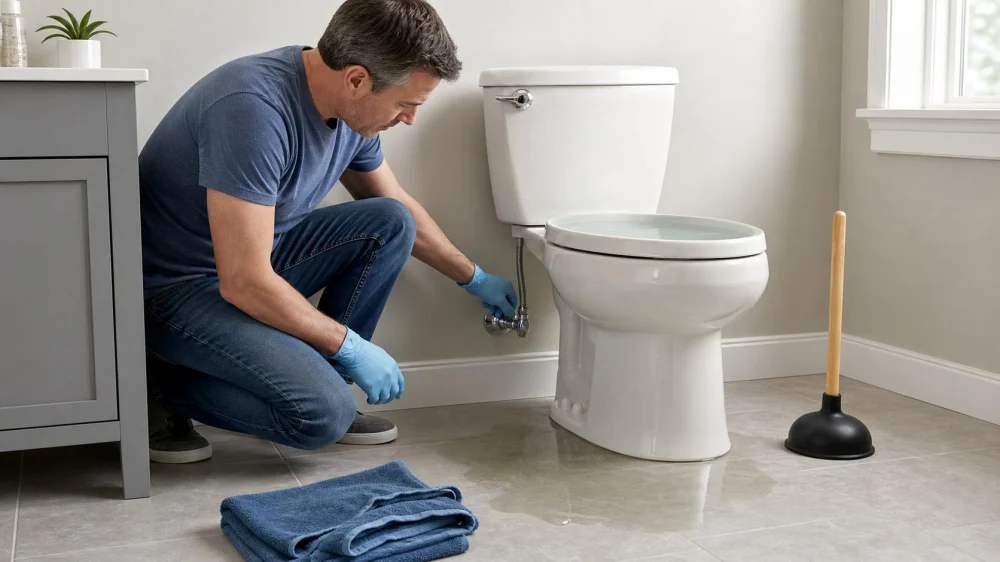
Do not flush again. If the bowl is rising, stop the tank from refilling by closing the toilet's shutoff valve clockwise without forcing it. Keep people and pets away, avoid electrical hazards, and contain the water. Use a toilet plunger only for a simple local clog with room in the bowl; call a plumber for sewage, multiple affected drains, repeated overflow or uncertainty.
This guide is for a typical gravity-flush household toilet. Pressure-assisted, wall-hung, macerating, smart and commercial toilets can have different controls. Follow the fixture manufacturer's instructions and do not dismantle a pressurized or unfamiliar system.
Sewer Xpress Corp / pipe xpress inc
Eastampton TownshipBurlington CountyNew Jersey
649 Powell Rd, Eastampton Township, NJ 08060, USA
What to do in the first minute
A toilet overflow occurs when water enters the bowl faster than it can leave through the trap and drain. The immediate goal is to stop new water, not to force the existing water through.
- Stop flushing. A second flush adds an entire tank or programmed volume to a blocked bowl.
- Close the toilet shutoff. Find the small valve on the wall or floor behind or beside the toilet and turn it clockwise gently. If it will not move, do not use pliers or excessive force; an old valve or pipe can break.
- Stop the tank fill if needed. Remove the tank lid carefully and lift the float or close the flapper only if you can identify the parts safely. Set the lid on a towel away from the edge.
- Keep the area clear. Move children and pets away and wear gloves and closed shoes.
- Check electrical risk. If water is near an outlet, cord, appliance, electric baseboard or floor penetration, do not step into it or touch electrical equipment. Leave the area and use an electrician or emergency service as appropriate.
- Contain spread. Place towels or absorbent barriers at the bathroom doorway without pushing contaminated water into carpet, wall cavities or HVAC openings.
If the toilet valve cannot be closed and water continues entering, use the home's main water shutoff only if you already know its location and can operate it safely. Do not search through standing water or force an unknown valve during an emergency. Call a local plumber for immediate help.
Bill Trombly Plumbing - Heating - Cooling - Electric / jim trombly heating
ManchesterHillsborough CountyNew Hampshire
76 Maple St, Manchester, NH 03103, USA
Distinguish a local clog from a larger drain problem
A single toilet that overflowed immediately after an unusually large amount of toilet paper may have a local trap or branch-line blockage. That does not prove the obstruction is simple, but it makes one careful plunging attempt more reasonable.
Stop DIY work and treat the issue as a possible larger drain or sewer problem when you notice:
- More than one toilet, tub, shower or floor drain is slow, gurgling or backing up.
- Water rises in a shower or tub when a toilet is flushed or appliance drains.
- Wastewater appears at the lowest fixture or floor drain.
- The overflow happens without anyone using that toilet.
- There is sewage, a strong wastewater odor or visible solids from another source.
- The property uses a septic system and other drains are affected.
- The same toilet clogs repeatedly.
When multiple fixtures are involved, stop using water throughout the home. That includes toilets, taps, washing machines, dishwashers and showers. Additional discharge can worsen the backup.
For properties in Boone, North Carolina, confirm whether the affected pipe is private plumbing, a building drain, a sewer lateral or part of a utility system before assuming who is responsible. A plumber can help identify the likely boundary; utility contact and responsibility rules depend on the property and service provider.
When a careful plunge is reasonable
Use a toilet plunger with a flange that fits the bowl outlet. A flat sink plunger may not seal correctly. Do not use a plunger after adding chemical drain cleaner; splashing can expose skin and eyes to a corrosive product.
Wait until the bowl level stops rising. If it is close to the rim, remove some water into a sturdy container only if the water is not sewage-contaminated and you can avoid splashing. Do not pour it into another blocked fixture.
- Place the flange over the toilet outlet and create a full seal.
- Start with a gentle push to expel trapped air without splashing.
- Use several controlled push-pull strokes while maintaining the seal.
- Pause and see whether the water drains.
- Repeat one short cycle if progress is clear.
Stop if the water does not move, the toilet rocks, the seal at the floor leaks, another drain reacts, or you suspect a hard object. Aggressive plunging can lodge an object farther into the trap or stress a loose fixture.
Do not test with a full flush. After the water drains and the suspected obstruction is cleared, add a small controlled amount of clean water to the bowl and confirm it drains normally. Reopen the toilet valve slowly and watch the tank, supply connection, bowl and floor before a normal test.
Contain water and clean safely
Overflow water is not automatically clean. Bowl water can contain urine, faeces, cleaning chemicals and microorganisms. If wastewater came from a drain backup, treat it as sewage-contaminated.
For a small contained spill:
- Wear disposable gloves and protect cuts.
- Remove wet disposable material into a durable bag.
- Clean visible soil before applying a suitable disinfectant.
- Follow the disinfectant label for dilution, surface compatibility, ventilation and contact time.
- Never mix bleach with ammonia, acids, toilet-bowl cleaners or other products.
- Wash hands thoroughly after removing gloves.
Porous materials are harder to restore. Contaminated carpet, underlay, drywall, insulation, engineered wood, cabinetry and ceiling material below the bathroom may need professional evaluation and removal. Drying the surface does not prove hidden cavities are clean or dry.
If water reached a floor below, entered a wall, covered a large area, involved sewage, or affected someone at higher infection risk, contact a qualified water-damage or remediation professional. Photograph damage from a safe position before cleanup for property records, but do not delay containment.
When to call a plumber in Boone
Call a licensed local plumber when:
- The shutoff valve leaks, will not close or appears damaged.
- Plunging does not restore normal drainage.
- A toy, wipe, hygiene product or other object may be lodged.
- The toilet rocks, leaks at its base or has a cracked bowl or tank.
- Multiple fixtures are slow or backing up.
- Overflow repeats after a temporary improvement.
- The property has a septic concern or possible frozen drain.
- Water has damaged walls, floors or a room below.
When comparing plumbers near Boone, check the listed service area, current hours, licence where applicable, insurance, emergency response, diagnostic fee, written estimate and who will perform the work. Describe the fixture, timing, other drain symptoms, shutoff condition, contaminants and any item that may have entered the toilet.
A useful call begins: “The upstairs toilet overflowed after one flush. The toilet valve is closed. No other drains are affected, and I have not used chemicals.” That gives the dispatcher better information than “the bathroom is broken.”
Important limits and damage checks
Do not pour boiling water into a toilet; rapid temperature change can damage porcelain or seals. Do not use a powered drain snake without understanding the fixture and line. The tool can scratch porcelain, become stuck, damage a pipe or cause injury.
Never combine drain chemicals or use them in a toilet unless the product specifically permits that exact use and the plumbing professional agrees. Chemical products may remain in the bowl or line and endanger anyone who later opens the drain.
After the repair, check the floor around the base, the supply tube, shutoff valve, tank bolts and ceiling below over the following days. Staining, swelling, soft flooring, odor or recurrent moisture needs further investigation.
Frequently asked questions
Should I take the tank lid off?
Only if water is still entering and you can safely identify the float or flapper. Close the toilet shutoff first when it operates. Tank lids are heavy and fragile, so place the lid flat on a padded surface.
Can I use dish soap and hot water?
Adding liquid to a nearly full bowl can cause another overflow, and very hot water can damage porcelain or seals. A correctly fitted toilet plunger is more controlled for a suspected soft local clog.
Why did the toilet overflow without flushing?
It can indicate wastewater entering from a larger drain blockage, another fixture, a failed fill control or another plumbing problem. Stop household water use and call a plumber, especially if other drains react.
Is the water clean if it came from the tank?
Once water enters the bowl or contacts the bathroom floor, assume contamination is possible. Use gloves, keep vulnerable people away and clean according to the actual exposure.
When can I turn the toilet valve back on?
After the obstruction is cleared, the bowl drains normally, and no fixture or connection is leaking. Open it slowly while watching the tank, supply and floor. Stop if water rises unexpectedly.
Sources and evidence notes
This article reflects common gravity-toilet operation, plumbing triage and general electrical and contamination safety principles. Fixture designs, drainage systems and local service responsibilities vary. Manufacturer instructions, local utility guidance and on-site professional assessment take priority.
Conclusion and next steps
When a toilet overflows, stop new water before attempting to clear anything. Keep people away, avoid electrical contact, and determine whether only one fixture or several drains are affected. A controlled plunge may clear a simple local clog, but sewage, repeated overflow, a stuck object, valve trouble or hidden water damage needs professional help. Record the symptoms and contact a qualified plumber serving Boone with a concise, accurate description.
 Ralph E Geiselman Plumbing5.0 (24 reviews)
 Michaels Plumbing Professionals4.0 (35 reviews)
 Andrew J Goldschmidt, Inc Plumbing, Heating, and Air Conditioning4.0 (5 reviews)
 Bilo Plumbing and Heating4.0 (8 reviews)
 DB's Plumbing and Drain®4.0 (1864 reviews)
 Kingsbury Plumbing Heating0.0 (0 reviews)
 Signs You Need Detecting a Hidden Water Leak | Tips for Homeowners
 When Should You Call a Plumber for Clogged Drains?
 The Complete Guide to Plumbing Tools Every Homeowner Should Have
 Why Choosing the Right Pipe Materials is Crucial for Your Plumbing Needs
 Why Is My Water Heater Broken? Common Causes and How to Fix It
 How to Fix a Leaking Sink Drain Tailpiece: A Step-by-Step Guide