
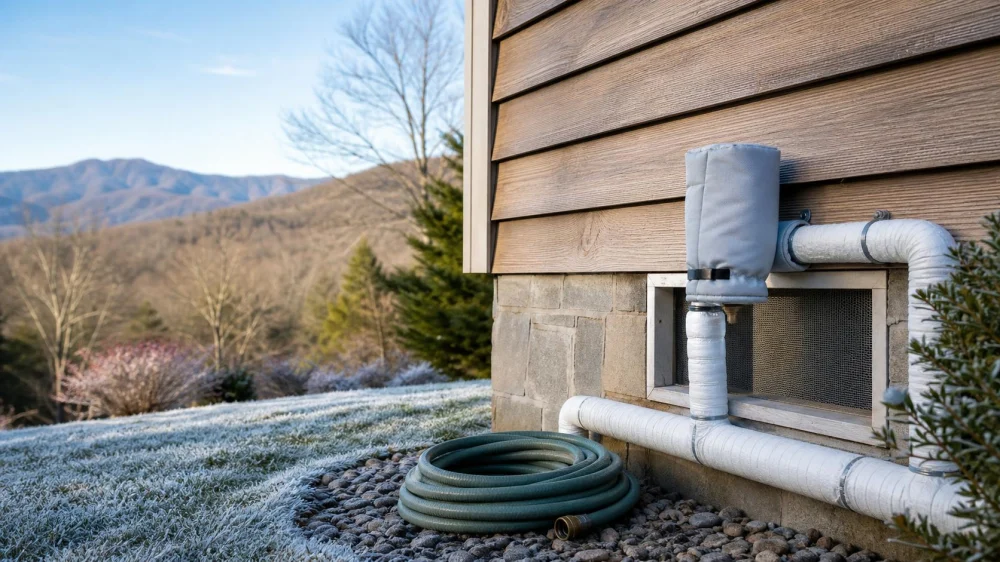
How to Prevent Frozen Pipes Before a Cold Snap
On this page
Quick answer
Before freezing weather, disconnect hoses, protect exposed outdoor fixtures, insulate vulnerable water lines, seal cold-air gaps without blocking required ventilation, and keep heated areas at a safe temperature. Open sink cabinets only when it is safe for children and pets, and follow local utility guidance on dripping taps. Know how to stop water, but call a plumber for inaccessible, damaged or repeatedly frozen lines.
Stashluk Mechanical Contractors Inc. / stashluk
Franklin TownshipHunterdon CountyNew Jersey
998 Croton Rd, Pittstown, NJ 08867, USA
Why pipes freeze
A frozen water pipe is a water-filled line in which ice restricts or blocks flow; expanding ice and pressure elsewhere in the line can split fittings or pipe walls. The leak may not appear until the ice thaws and full pressure returns.
Boone, North Carolina homes can have crawl spaces, mountain exposure, exterior-wall plumbing, seasonal occupancy and rapid weather changes. Risk depends on construction, wind, insulation, pipe location, heating and duration of cold—not simply one outdoor temperature.
Bill Trombly Plumbing - Heating - Cooling - Electric / jim trombly heating
ManchesterHillsborough CountyNew Hampshire
76 Maple St, Manchester, NH 03103, USA
Checklist before cold weather arrives
- Map vulnerable plumbing. Look for supply lines in unheated crawl spaces, garages, attic edges, exterior walls and cabinets over cold voids.
- Disconnect garden hoses. Drain and store them. Follow the fixture maker’s instructions for frost-free or conventional hose bibs.
- Protect outdoor fixtures. Use suitable insulated covers and close interior shutoffs only when the system was designed for that process.
- Insulate accessible lines. Use pipe insulation sized and rated for the location. Insulation slows heat loss; it does not create heat.
- Seal drafts carefully. Address gaps where cold air reaches pipes, while preserving combustion air, dryer clearances, drainage and code-required ventilation.
- Service heat sources. Confirm the main heating system works and that safe heat can reach plumbing zones.
- Test monitoring. Check low-temperature and leak sensors, their batteries, Wi-Fi limitations and alert contacts.
Best DIY work: visible inspection, hose removal, approved covers and straightforward insulation on sound accessible pipe. Not ideal for DIY: altering concealed piping, electrical heat cable, combustion equipment or unsafe crawl-space work without the required skill and approvals.
What to do during the freeze
- Maintain indoor heat according to your building, insurer, equipment and utility guidance.
- Keep garage doors closed when water lines run through the garage, while maintaining safe vehicle and appliance ventilation.
- Open vanity or sink cabinets so room air can circulate only if chemicals, sharp objects and hot pipes remain inaccessible to children and pets.
- Follow local utility or plumber advice on whether a small tap drip is appropriate. It uses water and is not a substitute for fixing exposure.
- Keep interior doors positioned so heated air reaches vulnerable rooms.
- Check remote sensor alerts and arrange a responsible local contact if you are away.
Never use an open flame, charcoal heater, unvented fuel burner or unattended portable heater to warm plumbing. Observe electrical loads and manufacturer clearances for any approved heating product.
Cabins, rentals and vacant homes
Do not assume turning the thermostat down is enough. A winterisation plan may include shutting off the supply, draining particular systems, protecting traps with an approved product, servicing wells or pumps, and documenting the property for insurance. The correct method depends on the plumbing and appliances.
Have a licensed local plumber or qualified winterisation service plan the sequence. Improper draining can damage water heaters, boilers, pumps, filters, irrigation equipment and appliances. Never put automotive antifreeze into potable-water piping.
If a pipe may be frozen
A tap that suddenly produces little or no water during freezing weather can indicate a frozen section, but closed valves, well issues and utility interruptions are other possibilities. Check other fixtures and ask neighbours or the utility about wider outages.
- Look and listen for visible splits, bulges, dripping or running water.
- If water is escaping, stop the water only if you can do so safely and call a plumber.
- Keep the affected tap open only when a qualified professional or reliable system guidance recommends it.
- Apply gentle room heat or an approved method to an accessible, confirmed frozen area; start toward the open fixture.
- Never use flame, a torch, boiling water or an improvised high-heat device.
- Inspect during and after thawing because a split may begin leaking as ice clears.
When to call a plumber
Call promptly for a burst or leaking line, inaccessible freeze, repeated freezing, no safe water shutoff, uncertain pipe material, well or pump complications, or a home that cannot maintain heat. Treat water near electrical equipment as an electrical hazard and keep people away; use emergency services or the utility when immediate danger exists.
For local service in Boone, ask whether the plumber handles freeze emergencies, provides arrival and after-hours terms, can explain the repair scope, and will identify the cold-air or insulation issue that caused recurrence. PlumberNear is a directory and does not itself claim to perform plumbing work.
Sources and evidence notes
This article reflects broad cold-weather plumbing practice, building-safety principles and manufacturer guidance. Exact winterisation, insulation, heat-cable and shutoff methods depend on the building, system, code, product and insurer. Local utility notices, product instructions and qualified trade guidance take priority.
Frequently asked questions
At what temperature do pipes freeze?
There is no universal outdoor threshold. Exposure time, wind, insulation, pipe location and indoor heat all matter, so prepare when local forecasts and authorities warn of freezing conditions.
Should I leave every tap dripping?
No. Ask the local utility or plumber which vulnerable line, if any, may benefit. Dripping wastes water and cannot overcome every exposure.
Does foam insulation guarantee protection?
No. It slows heat loss but cannot supply heat or repair drafts. Severe or prolonged cold can still freeze an insulated line.
Can I use a hair dryer on a frozen pipe?
Only if the area is dry, the pipe is accessible, the appliance is used safely and authoritative guidance permits it. Keep electrical appliances away from leaks and standing water.
Will a frost-free hose bib prevent every freeze?
No. It must be installed and drained correctly, and a connected hose can prevent drainage. Follow its manufacturer’s instructions.
Conclusion and next steps
Walk the property before the next cold snap: disconnect hoses, inspect cold zones, improve approved insulation, test heat and alerts, and confirm a winter plan for vacant spaces. Keep the plumber and utility contacts accessible. Preventing cold airflow and maintaining safe heat is more reliable than reacting after water stops.
 BM Plumbing and Heating Inc4.0 (7 reviews)
 Pullman Plumbing4.0 (79 reviews)
 L&S Plumbing Heating & Cooling LLC4.0 (40 reviews)
 Accurate Baker Elman4.0 (428 reviews)
 Montemarano Plumbing4.0 (26 reviews)
 McBride & Company Plumbing, Heating, Air Conditioning4.0 (25 reviews)
 Sewer Backup Warning Signs and What to Do First
 Beginner's Guide to a Broken Water Heater: What You Need to Know
 What to Do If Your Sewer Line Needs Repair
 What Causes a Slab Leak Under Your House and How to Fix It
 Why Is My Water Heater Tank Sweating? Understanding the Causes and Solutions
 What Causes Replacing Old Pipes