
Dishwasher Air Gap Overflow: Stop the Cycle and Check
On this page
Quick answer
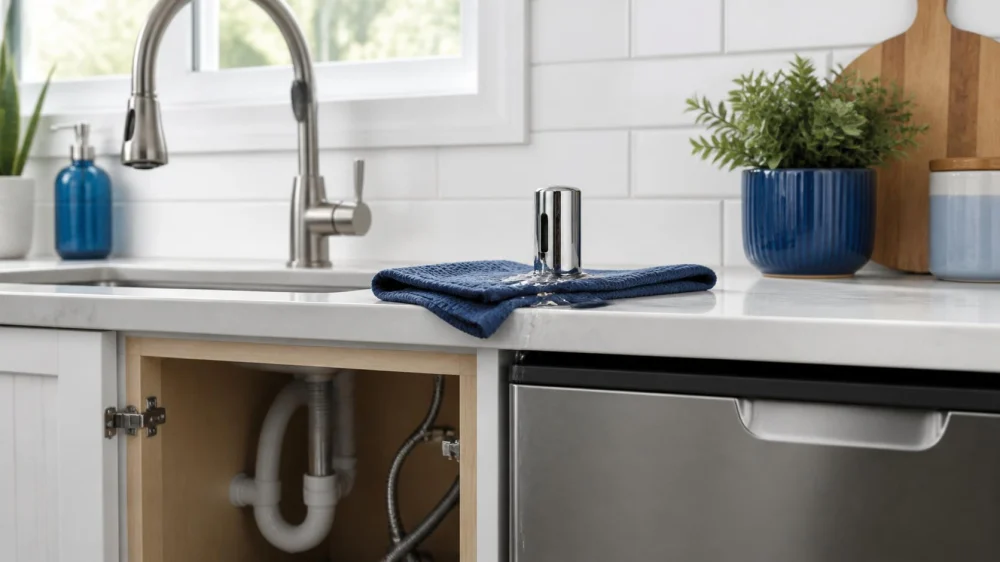
Water coming from the small air-gap cap beside a kitchen faucet usually means dishwasher drain water cannot move freely downstream. Cancel the cycle, stop using the dishwasher and sink disposer, wipe up water, and disconnect power only from a dry safe location. Check the appliance manual before removing the air-gap cover.
A blocked air gap, obstructed hose to the disposer or drain, plugged disposer inlet, kinked hose, or downstream sink-drain problem may be responsible. Do not seal the air gap, attach a hose over its vent, or pour drain cleaner into it.

Mike the Plumber / mike the plumber
1545 Ocean Ave A3, Bohemia, NY 11716, USA
Identify the air gap
A countertop air gap is a short capped fitting, often mounted near the faucet. Dishwasher discharge enters one side and flows through a larger hose to the disposer or drain connection. The open vent prevents contaminated sink water from being siphoned back under specified plumbing designs.
Not every installation uses a countertop air gap, and requirements vary. Do not confuse it with a soap dispenser, filtered-water tap, or sink overflow. Check the dishwasher manual and under-sink routing.
JetBlast Inc. Water Blasting Sewer & Drain Cleaning / jet blast drain cleaning
BaltimoreAnne Arundel CountyMaryland
6800 Fort Smallwood Rd, Baltimore, MD 21226, USA
Stop water safely
- Cancel or pause the dishwasher using its controls.
- Keep towels away from outlets and cords.
- Turn off the dishwasher circuit at the panel if water threatens electrical parts and the panel is safely accessible.
- Do not put a hand into a disposer.
- Place a bowl and towels beneath under-sink hoses before inspection.
If water continues after the appliance stops, close the dishwasher supply valve only if it operates normally. Use the main shutoff and call for help when a valve is stuck or leaking.
Common causes
- food debris or mineral buildup inside the air-gap body;
- a blocked or kinked large hose from air gap to disposer;
- a new disposer whose dishwasher inlet knockout was never removed;
- debris at the disposer inlet connection;
- a clogged sink drain causing backup;
- incorrect hose size, routing, or connection; or
- a drain pump or dishwasher fault.
If the sink is also slow or backs up, the downstream drain may need professional clearing. Never mix chemical cleaners, and tell the plumber about any product already used.
A limited cleaning check
With the dishwasher off and power isolated as its manual directs, lift or unscrew only the decorative cap if designed for user removal. Remove loose visible debris from the accessible top using a soft brush or paper towel. Do not push a sharp tool deep into the fitting.
Replace the cap correctly before testing. Run a short rinse while watching from a dry position. Stop immediately if water reappears. Repeated overflow means the restriction or routing problem remains.
Inspect drain routing
Use a torch to look beneath the sink without disconnecting anything. The hose should not be crushed by stored items or sharply kinked. Connections should be supported and free of leaks.
Do not remove a disposer knockout or hose clamp unless you understand the appliance instructions and can isolate power. A disposer can start unexpectedly, and incorrect connections can leak into cabinetry.
When to call a plumber
Call a plumber or appliance technician for repeated overflow, slow sink drainage, inaccessible or hardened blockage, leaking hoses, corroded fittings, new-disposer installation issues, or uncertainty about code-compliant routing. Stop and call immediately for sewage backup, burning smell, tripped circuits, or water near wiring.
Photograph the air gap, hose routing, disposer connection, and leak location. Provide dishwasher and disposer model numbers and say whether the problem started after installation or drain work.
Overflow checklist
- Cancel the cycle and keep water away from electricity.
- Do not use the disposer or sink until the path is assessed.
- Confirm the fitting is an air gap.
- Clean only the user-accessible cap area.
- Look for crushed hoses without disconnecting them.
- Never cap the vent or add drain chemicals.
- Test briefly and stop if overflow returns.
Frequently asked questions
Can I remove the air gap permanently?
No. It may be required for backflow protection and local code.
Why did it start after replacing the disposer?
The inlet may be unopened or the hose may be misconnected; have the installation checked.
Can I use a drain snake through the top?
Not unless the manufacturer or plumber directs it. Sharp tools can damage the fitting or hose.
Is a little water normal?
Water should flow through the drain path, not spill onto the counter. Overflow deserves investigation.
Can drain cleaner fix it?
Do not pour drain cleaner into the air gap or mix products. Call a professional.
Who should I call?
A plumber handles drains and routing; an appliance technician may diagnose dishwasher pump or control faults.
Sources and evidence notes
The dishwasher, air-gap, and disposer installation manuals define the approved hose diameter, routing, knockout steps, connections, and user cleaning procedures. Local plumbing code determines required backflow protection.
When manuals conflict or the installation is inaccessible, a licensed plumber or authorised appliance technician should inspect it. Never bypass a protective air gap to stop visible overflow.
Conclusion and next steps
Stop the dishwasher when its air gap overflows, protect electrical safety, and check only the accessible cap and visible hose routing. Do not seal the vent or use drain chemicals. Repeated overflow, a slow sink, disposer changes, leaks, or wiring risk requires qualified service and a code-compliant drain path.
 Steve Burke Plumbing, LLC4.0 (5 reviews)
 Fred J. Moyer Plumbing Inc.3.0 (23 reviews)
 PipePulse Plumbing5.0 (3 reviews)
 Mario's Faucet and Toilet Repairs, Drain Cleaners Specialists4.0 (9 reviews)
 Dundee Plumbing & Heating4.0 (24 reviews)
 Petitte's Plumbing Heating & Air5.0 (9 reviews)
 Top Tips for Frozen Pipes
 Best Ways to Fixing a Garbage Disposal: Safe DIY Tips and When to Call a Pro
 How to Know If You Need a Plumbing Upgrade for Your Home
 Estimating the Cost to Replace All Plumbing in Your Home
 How to Protect Your Plumbing System During Renovations
 Why Choosing the Right Pipe Materials Matters for Your Home