
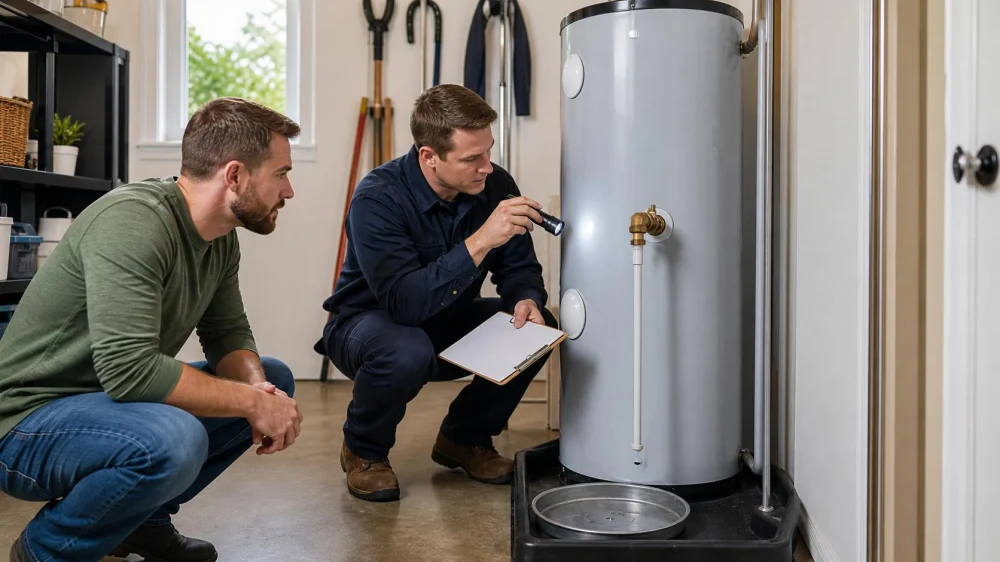
Water Heater Relief Pipe Dripping: Never Cap the Outlet
Table of contents
Quick answer
A dripping temperature-and-pressure relief discharge pipe can indicate thermal expansion, excess temperature or pressure, debris, an unsuitable installation, or a faulty valve. Keep clear because discharged water may be dangerously hot. Never cap, plug, clamp, reduce, or add a shutoff to the outlet. Follow the water heater manual, turn off energy only if you can do so safely, and arrange prompt inspection by a qualified plumber.
Bill Trombly Plumbing - Heating - Cooling - Electric / jim trombly heating
ManchesterHillsborough CountyNew Hampshire
76 Maple St, Manchester, NH 03103, USA
What the relief valve does
A storage water heater holds heated water under pressure. Its temperature-and-pressure relief valve is a safety device intended to discharge water if temperature or pressure becomes excessive. The discharge pipe directs that release toward an approved termination.
Blocking the valve or pipe can prevent pressure relief. U.S. Department of Energy materials and manufacturer instructions explicitly warn not to cap or plug a discharge line and not to remove the relief valve. The correct response to dripping is diagnosis, not obstruction.

Stashluk Mechanical Contractors Inc. / stashluk
Franklin TownshipHunterdon CountyNew Jersey
998 Croton Rd, Pittstown, NJ 08867, USA
First safety steps
- Keep away from the outlet. Assume the water and metal surfaces may scald.
- Protect others. Keep children and pets out of the area.
- Look and listen from a distance. Note steady flow, intermittent drips, steam, noise, or tank deformation.
- Check for immediate danger. Leave and call emergency services for fire, gas odor, smoke, violent shaking, or a rapidly worsening event.
- Call a qualified plumber. Describe the discharge and follow their shutdown instructions.
- Use the manual. If the plumber or manufacturer directs shutdown, follow the exact gas or electrical procedure only when accessible and safe.
Do not stand over the valve, lift its test lever, or reach through hot discharge to operate controls.
What to observe
- Whether the source is the relief discharge pipe, tank, drain valve, supply connection, or condensate line
- Continuous flow, occasional drip, or discharge after a heating cycle
- Water temperature at normal fixtures without deliberately exposing yourself to hot water
- Recent plumbing changes, pressure-reducing valve work, or installation of a backflow device
- Age, make, model, fuel type, and visible warning label
- Rust, corrosion, bulging, hissing, or water around the base
- Whether a thermal expansion tank is present and who last serviced it
Photograph from a safe position. Do not touch a wet electrical water heater or enter standing water to reach it.
Why discharge may occur
Thermal expansion: Heated water expands. In a closed plumbing system, pressure can rise unless a correctly designed and functioning expansion-control method is present.
High supply pressure: Building pressure above equipment limits can stress fixtures and contribute to discharge. A plumber can measure it with suitable equipment.
Excess temperature: A thermostat or control problem may overheat water and requires qualified service.
Valve condition: Mineral debris, age, corrosion, improper sizing, or a damaged valve can prevent correct sealing. Replacement must match the heater and code.
Installation problem: Wrong pipe material or size, improper termination, a valve downstream, or an unsuitable route can create hazards. Local code and manufacturer instructions control.
What to tell the plumber
- Exact source and discharge pattern
- Heater model and fuel type
- Recent changes to plumbing or utility pressure
- Any unusually hot water or control behaviour
- Visible condition of the valve, pipe, pan, and expansion tank
- Whether water has reached walls, flooring, wiring, or combustion equipment
- Steps already taken and current energy or water status
Ask the plumber to check system pressure, thermal expansion control, temperature regulation, valve rating and condition, discharge piping, and the tank itself. A new valve alone may not correct the underlying cause.
What never to do
- Never cap, plug, crimp, clamp, or tape the discharge outlet.
- Never install a valve between the tank and relief valve or on the discharge line.
- Never remove the relief valve and operate the heater.
- Never replace it with an unverified part.
- Never route discharge into a sealed container.
- Never repeatedly operate the test lever to stop a leak.
- Never increase thermostat settings to test the system.
- Never relight or re-energise equipment that a professional has shut down.
Limit water damage safely
Use a bucket or pan only if it can sit below the termination without touching, restricting, or enclosing it. Keep the area clear so the pipe can discharge freely and remains visible. Move dry belongings away. For substantial water, contact restoration help and your insurer or landlord as applicable.
Do not improvise a hose or extension; discharge piping is safety-critical. Let a plumber correct termination and drainage under local code.
Limits and emergencies
This guide cannot determine whether a heater is safe or tell you how to alter gas, electrical, pressure, or relief components. Leave the building and call emergency services for gas odor, fire, smoke, explosion sounds, tank movement or bulging, severe steam, or immediate structural or electrical danger. Seek medical help for burns. Otherwise, arrange prompt qualified plumbing service and keep the heater off if directed.
Frequently asked questions
Can I put a cap on the pipe overnight?
No. The outlet must remain open. Shut down safely only under verified instructions and obtain service.
Is a few drops normal?
Do not assume so. Intermittent discharge can signal expansion or pressure issues. Record it and have the system assessed.
Can I replace the valve myself?
This involves hot pressurised equipment and code requirements. Use a qualified plumber who can diagnose the cause and select the correct part.
Will a new expansion tank fix it?
Only assessment can determine that. Existing pressure, tank sizing, air charge, controls, valve condition, and installation all matter.
Official sources
DOE’s water-equipment maintenance guidance discusses temperature-and-pressure relief discharge, pressure reduction, and expansion control. DOE technical material also states that relief discharge lines must not be capped or plugged. The specific water heater manual and current local plumbing code remain controlling sources.
Next steps
Keep the outlet unobstructed, photograph the discharge safely, find the model and manual, and call a qualified plumber today. Ask for the cause—not only the drip—to be evaluated and documented.
 Ralph E Geiselman Plumbing5.0 (24 reviews)
 Old School Plumbing & Heating5.0 (23 reviews)
 Roto-Rooter Plumbing & Water Cleanup4.0 (165 reviews)
 Moonlight Plumbing LLC4.0 (107 reviews)
 Bob Bell Plumbing4.0 (12 reviews)
 Woelfel Plumbing & Heating5.0 (2 reviews)
 How to Replace a Leaking PVC Elbow Joint - Step-by-Step Guide
 How Much Does It Cost to Detect a Hidden Water Leak?
 When Should You Call a Plumber for Sewer Line Backups?
 Expert Advice on Low Water Pressure: How to Troubleshoot and Fix It
 What Causes Toilet to Leak from Tank to Bowl and How to Fix It
 Why Is My Toilet Tank Water Level Too High? Causes & Fixes