
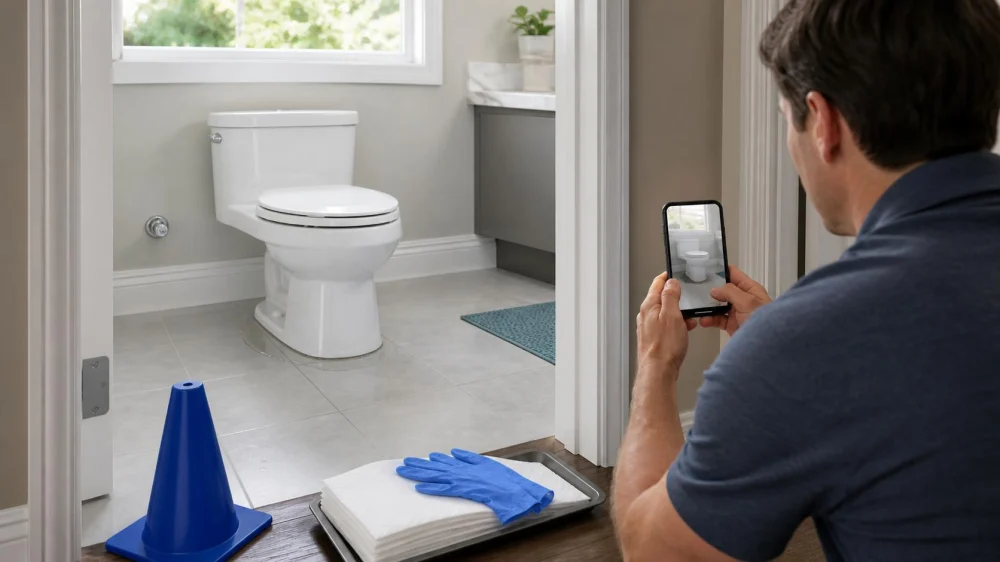
Toilet Leaking at the Base: Stop Use and Protect the Floor
On this page
Quick answer
Stop using a toilet that leaks at the base, keep people and pets away, and dry only the accessible floor while wearing appropriate protection. Check whether clean supply water is running down from the tank, valve or hose before assuming the floor seal failed. Do not keep flushing to test it, tighten bolts aggressively or hide the leak with caulk. A plumber should identify the source and inspect the flange and floor.
This guide is for homeowners in Boone, North Carolina making the bathroom safe and preparing useful observations. Water at the base can come from several locations, and the visible puddle does not prove the toilet-to-drain seal is the source.

Mike the Plumber / mike the plumber
1545 Ocean Ave A3, Bohemia, NY 11716, USA
Stop use and isolate the area
- Do not flush again. Each flush can release more water if the bowl outlet, seal, flange or drain connection is involved.
- Keep the room clear. Close the door or use a simple barrier so children and pets do not contact a slippery or contaminated floor.
- Close the toilet shutoff if needed. Turn the accessible valve gently clockwise only if it is dry, operates normally and can be reached safely. Do not force a seized valve.
- Avoid nearby electricity. Keep water away from floor heaters, powered bidet seats, extension leads, outlets and appliances. Use an electrician when moisture reaches electrical equipment.
- Contain spread. Place absorbent material around the edge of the puddle without pushing water into gaps, floor vents or adjacent rooms.
Treat water associated with a toilet or drain as potentially contaminated. Wear disposable gloves, avoid splashing, wash hands and keep cleaning materials separate from kitchen or general household supplies.

coastal & son, llc / aj appliance toms river nj
Toms RiverOcean CountyNew Jersey
1106 Verdant Rd, Toms River, NJ 08753, USA
Check where the water starts
Without flushing, use a torch from a dry position and inspect from top to bottom:
- Tank condensation: Water can form on a cold tank and run down to the floor during humid conditions.
- Supply valve or connector: A drip may travel along the hose or wall and collect at the base.
- Tank bolts or tank-to-bowl connection: On a two-piece toilet, water can run down the back or sides.
- Bowl crack: A visible crack or persistent seep can require immediate replacement and no further use.
- Floor seal or flange area: Water that appears only after flushing can indicate a failed seal, movement, flange problem or drain issue.
- Nearby fixture: A bath, shower, sink, supply pipe or wall leak can emerge beside the toilet.
Blot every accessible exterior surface dry with separate towels, then watch without operating the toilet. If water reappears from the supply side while the toilet is idle, close the shutoff if safe and call a plumber. Do not touch a cracked bowl or put weight on a rocking toilet.
Likely sources and what they mean
Supply-side leak: Water is generally cleaner than drain water but can still damage flooring and walls. The valve, connector, tank fitting or seal may require replacement. A corroded valve or rigid connection can break when disturbed.
Condensation: Droplets across the tank or bowl may collect on the floor. Confirm that no connection leaks and discuss humidity, ventilation, tank temperature and insulation options with a plumber rather than assuming every puddle is condensation.
Failed floor seal: A seal between the toilet outlet and flange can fail because of age, movement, incorrect installation, flange height or damage. Replacing only the seal without correcting movement or flange problems can lead to another leak.
Loose or damaged flange/floor: A toilet that rocks, sits unevenly or compresses soft flooring may have lost secure support. Tightening bolts can crack porcelain or conceal a damaged subfloor. The toilet may need removal so the flange and floor can be inspected.
Drain restriction: A partial blockage can contribute to leakage during flushing. Do not add chemical drain cleaner or repeatedly plunge a toilet with water escaping at the base.
Why not to caulk first
Caulk around a toilet can improve appearance, help cleaning and, where required, seal the fixture edge. It is not a repair for a failed drain seal, cracked porcelain, loose flange or damaged floor.
Applying new caulk over an active leak can trap contaminated water beneath the fixture, redirect it into the subfloor and hide useful evidence. The toilet should be stable and the leak source corrected first. Ask the plumber how local code, flooring and the installation design affect final caulking.
Do not scrape old caulk or rock the toilet while water is present. Porcelain edges can be sharp, and movement may worsen the seal or damage.
Prepare for a plumber visit
- Photograph the puddle and toilet from a safe angle before drying.
- Record whether water appears while idle, during tank refill, after flushing or after another fixture is used.
- Note rocking, odour, slow draining, gurgling, recent clogs and changes in the floor.
- Write down the valve position and whether it closed without force.
- Clear a dry path and remove personal items without moving the toilet.
- Ask whether the estimate includes toilet removal, new seal, flange repair, supply parts, floor assessment, reset, caulk, testing and cleanup.
When choosing a plumber serving Boone, confirm current availability, applicable North Carolina licensing and insurance, after-hours charges, scope and responsibility for flooring or restoration. A plumbing company may identify damaged subfloor but refer structural or finish repair to another trade.
Limitations and sanitation notes
Surface drying does not prove that the subfloor, underlayment, wall base or ceiling below is dry. Swelling, softness, staining, odour or repeated moisture may require professional drying and material assessment.
Do not mix bleach with toilet cleaner, drain cleaner, ammonia, acids or any other cleaning product. Ventilate as product labels require and use appropriate disposal methods for contaminated absorbent material.
If the bathroom is the home's only toilet, tell the plumber when calling rather than continuing to use it. Ask about safe temporary arrangements. For a rental home, report the leak promptly through the required emergency channel and document the timeline.
Sources and evidence notes
This workflow reflects common plumbing and water-damage practice: stop fixture use, distinguish supply from drain pathways, avoid repeated testing, correct movement and flange defects before resealing, and assess hidden moisture after source repair. Exact toilet mounting, flange height, caulk and sanitation requirements depend on the fixture, floor assembly, local rules and contamination. Licensed plumbing and restoration guidance takes priority.
Frequently asked questions
Can I use the toilet once more to see where it leaks?
No. Another flush can add contaminated water and expand damage. Give the plumber your existing observations and allow controlled testing after the area is prepared.
Will tightening the floor bolts stop the leak?
Not reliably. Over-tightening can crack the porcelain, and loose bolts may be a symptom of flange or floor damage. Stop using a rocking toilet and have the mounting inspected.
Could the water be condensation?
Yes, especially when droplets cover a cold tank, but supply and drain leaks must still be ruled out. Dry the exterior and observe without flushing, then call a plumber if water returns or the source is uncertain.
Should a toilet be caulked to the floor?
Installation and code practices vary. Caulk may be used after the toilet is secure, properly sealed and tested, but it must not be used to hide active leakage or movement.
Who repairs damaged flooring?
Ask the plumber to define their scope. Toilet removal may reveal damage that needs a restoration contractor, carpenter, flooring professional or other qualified provider before the fixture is reset.
Next steps
Stop using the toilet, isolate the bathroom and close the accessible shutoff only if it moves safely. Photograph the water, dry accessible surfaces with gloves and observe without flushing. Call a plumber with the timing pattern, valve status and any rocking or floor change. Ask for source confirmation, flange and subfloor inspection, sanitation, reset testing and a clear division of repair responsibilities.
 Roto-Rooter Plumbing & Water Cleanup4.0 (1379 reviews)
 Roto-Rooter Plumbing & Water Cleanup4.0 (522 reviews)
 PlumbingMasters4.0 (136 reviews)
 Pennsylvania Best Plumbing Co4.0 (76 reviews)
 Ziegler Plumbing & Sewer4.0 (102 reviews)
 A & A Salsano4.0 (3 reviews)
 Preventing Winter Plumbing Issues: Tips for Homeowners
 Step-by-Step Guide to Installing a New Bathroom Shower Valve
 Signs You Need Low Water Pressure: Causes and Solutions
 How to Replace a Broken Bathtub Drain Stopper - A Complete Guide
 Preventing Plumbing Problems in Your New Home: What You Should Know
 How to Fix a Leaking PEX Pipe Connection Step-by-Step Guide