
Sump Pump Check Before Heavy Rain: Test Without Guessing
On this page
Quick answer
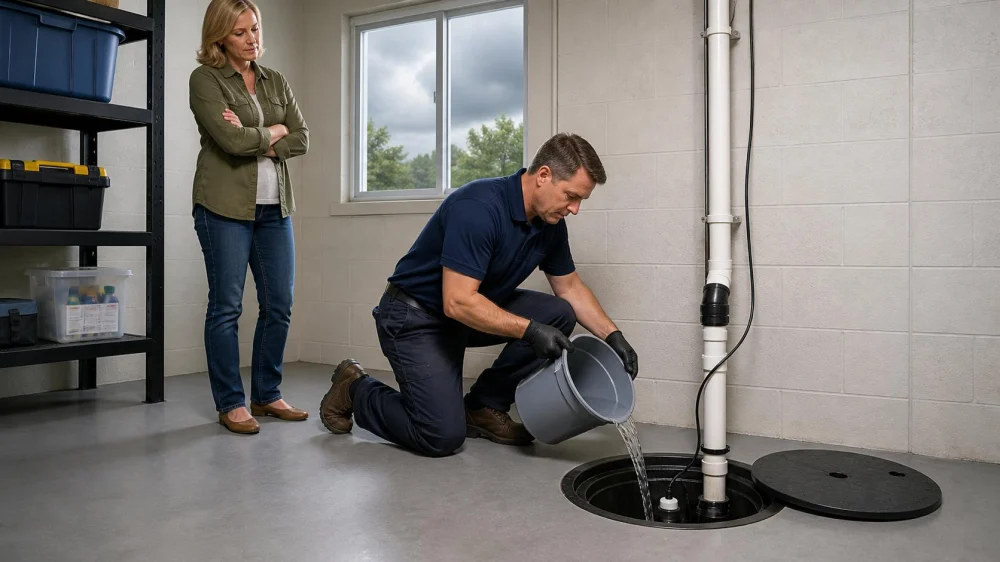
Before heavy rain, inspect the sump basin and pump without entering water, confirm the unit has safe power, raise the float or add clean water only as the manual permits, and verify that the pump starts, removes water, stops, and sends discharge away from the foundation. Check the outlet, alarm, backup, and exterior pipe. Call a plumber for exposed wiring, repeated cycling, failure, leaks, or unsafe access.
This guide is for homeowners, including properties around Boone, North Carolina, with an installed sump-pump system. Designs, electrical supply, basins, check valves, discharge rules, and backup systems vary. The equipment manual and local plumbing requirements control.

Landry Mechanical Inc Plumbing HVAC & Electric / landry mechanical
FraminghamMiddlesex CountyMassachusetts
763 Waverly St unit 32, Framingham, MA 01702, USA
Inspect before testing
- Use a dry, well-lit area and keep children and pets away.
- Do not stand in water or touch plugs, cords, or electrical parts with wet hands.
- Look for a secured basin cover, intact cord, stable pump, and unobstructed float.
- Check for debris, sediment, oil, sewage odour, insects, or a cracked basin.
- Listen for running, humming, grinding, or rapid on-and-off cycling.
- Confirm the circuit and outlet match manufacturer and code requirements.
Do not reach into the basin while the pump can start. Disconnect power only by the approved safe method before cleaning or touching components, and do not perform electrical work without qualification.

Mike the Plumber / mike the plumber
1545 Ocean Ave A3, Bohemia, NY 11716, USA
Run a controlled test
- Read the pump manual and identify the float or sensor type.
- Confirm the discharge line is connected and the exterior outlet is safe to observe.
- Test the float manually only if the manufacturer provides a safe method, or add clean water slowly to the basin.
- Watch for a prompt start at the expected level.
- Confirm water level falls and no pipe, joint, or check valve leaks.
- Verify the pump stops after the level drops.
- Stop the test if the pump runs dry, does not move water, overheats, trips power, or sounds abnormal.
Do not pour a large uncontrolled volume into the pit. Repeated tests can overheat equipment or flood an ineffective discharge. A pump that hums without lowering water needs service, not more testing.
Check the discharge path
Follow the pipe from the pump to the exterior where visible. Check joints, supports, the check-valve area, freeze exposure, and the termination. The line should send water to an allowed location away from the foundation without creating erosion, ice, or a nuisance for neighbours.
Remove leaves or surface debris around the exterior outlet without inserting tools deep into the pipe. Do not connect sump discharge to sanitary sewer, street, or another system unless local rules explicitly allow it.
In cold conditions, an exterior line can freeze. Insulation, slope, air gap, and freeze protection are design questions for a plumber; do not use an open flame or unsafe heater on the pipe.
Power, alarm, and backup planning
Heavy rain can coincide with an outage. Identify whether the system has a battery backup, secondary pump, water-powered backup, alarm, or connected notification. Test and maintain each component according to its own manual.
Never run a portable generator indoors, in a garage, crawlspace, or near openings. Carbon monoxide can kill. Use only a professionally planned safe power arrangement that complies with the generator and home-electrical instructions.
Heavy-rain checklist
- Weather alerts and property drainage reviewed
- Basin, cover, float, and visible cord inspected
- Controlled start-stop test passed
- Discharge observed at the exterior
- Leaks, noise, and cycling absent
- Alarm and backup tested
- Valuables moved above known risk areas
- Plumber, insurer, and emergency contacts available
Stop signs and limitations
Call a qualified plumber for a pump that fails to start or stop, trips the circuit, leaks, cycles rapidly, cannot keep up, or has a damaged cord or pipe. Call an electrician for outlet, circuit, or wiring concerns. Do not enter a flooded basement when electrical power may be present.
A sump pump does not guarantee a dry building. Foundation drainage, grading, gutters, groundwater, plumbing leaks, power, pump capacity, and extreme rainfall all affect performance.
Frequently asked questions
How often should I test a sump pump?
Follow the manufacturer and plumber's schedule and test before seasons or forecasts with higher water risk. Record the date and result.
Can I plug it into an extension cord?
Do not unless the manufacturer and electrical requirements explicitly permit it. Permanent safe power is important for unattended operation.
Why does the pump start every few minutes?
High inflow, a failed check valve, short discharge, float issue, or another condition may cause rapid cycling. Repeated cycling can damage equipment; request diagnosis.
Should the basin have a lid?
Many systems use a secured cover for safety, moisture, and gas control, but the required design varies. Ask a plumber about the correct sealed or serviceable cover.
What if the pump is already underwater?
Many pumps are designed to be submerged, but do not touch water or equipment if electrical safety is uncertain. Observe from a dry safe location and call for help.
Sources and evidence notes
This article reflects common sump-pump maintenance and electrical-safety practice: inspect, test with controlled water, verify discharge, keep the float clear, plan backup power, and avoid flooded electrical areas. Model instructions and local code determine exact work.
Next steps
Locate the manual and plumber contact before the next Boone-area heavy-rain forecast. Inspect from a dry position, run one controlled test, and walk the visible discharge route. Record start, stop, sound, and outlet flow. If anything is uncertain, schedule service before the storm rather than learning during rising water.
 Catons Plumbing, Drains & Water Cleanup5.0 (116 reviews)
 THE PLUMBING GOD4.0 (331 reviews)
 AP Plumbing Drains LLC4.0 (66 reviews)
 Tewksbury A1 Plumbing Services3.0 (2 reviews)
 MoCo Plumbing, LLC5.0 (414 reviews)
 Quality Plumbers Perth Amboy5.0 (21 reviews)
 Beginner's Guide to Unclogging a Bathtub Drain
 Why Is My Garbage Disposal Humming But Not Working? Troubleshooting Tips
 When Should You Call a Plumber for Clogged Drains?
 What Causes Water Damage in Your Bathroom: Prevention Tips and Solutions
 How to Prevent Drain Blockages with Simple Maintenance Tips
 When Should You Call a Plumber for Water Damage in Your Bathroom? | PlumberNear