
Refrigerator Water Line Leak: Shut Off and Trace It Safely
On this page
Quick answer
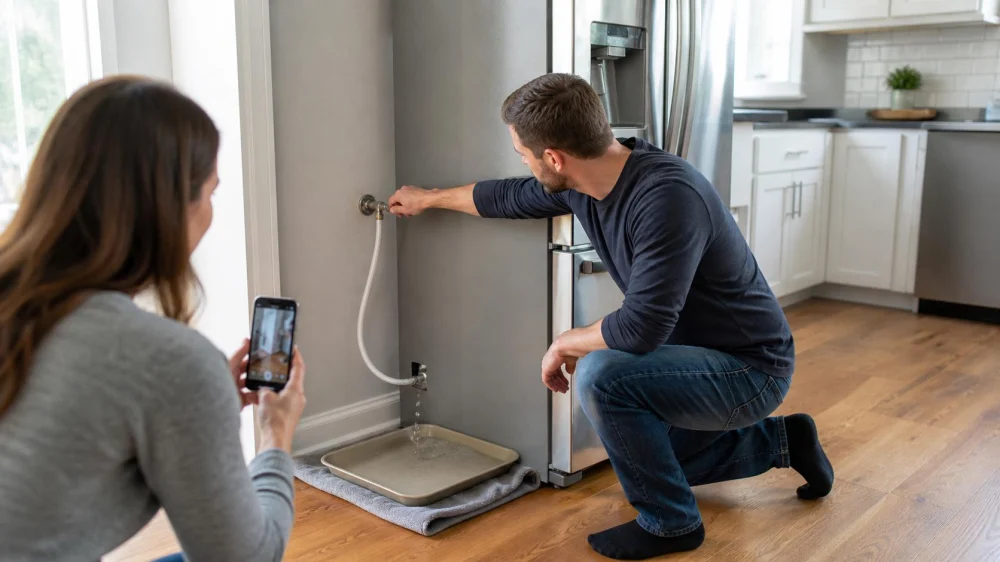
If water appears near a refrigerator, stop the dispenser and ice maker, keep people away from the wet floor, avoid electrical contact, and close the refrigerator's supply valve if it is accessible and operates normally. If the valve cannot stop the flow, use the known main shutoff or call for emergency plumbing help. Do not pull a heavy refrigerator across wet flooring or reach behind an energized appliance.

coastal & son, llc / aj appliance toms river nj
Toms RiverOcean CountyNew Jersey
1106 Verdant Rd, Toms River, NJ 08753, USA
First actions
- Keep children and pets out of the area and place towels or a tray only where it is safe.
- Do not touch the plug, outlet, cord, or electrical components with wet hands or while standing in water.
- Close the dedicated water valve by hand without forcing it.
- If water continues rapidly, close the main supply using a valve you know is safe to operate.
- Protect adjacent cabinets and flooring, photograph the scene, and call a plumber or appliance service provider.
Water near an outlet, sparking, a burning smell, a hot cord, or a soaked electrical panel requires distance and qualified emergency help. Power isolation should be done only from a dry, safe location by someone who understands the circuit.

Sewer Xpress Corp / pipe xpress inc
Eastampton TownshipBurlington CountyNew Jersey
649 Powell Rd, Eastampton Township, NJ 08060, USA
Trace the source
After flow is controlled, observe without dismantling. Dry accessible areas and place separate dry paper towels under suspected points to reveal fresh moisture. Possible sources include the wall valve, connector at the valve, tubing, inline filter, refrigerator inlet connection, filter housing, dispenser path, ice maker, condensate drain, or an unrelated nearby appliance or pipe.
- Note whether water is clear, warm, dirty, or only appears during dispensing or ice production.
- Look for cracks, kinks, corrosion, abrasion, loose supports, or tubing pinched behind the appliance.
- Check cabinets and the room below for hidden spread.
- Do not assume a puddle in front began at the front; flooring slope can carry water.
- Do not pressure-test a damaged line or repeatedly reopen the valve to “see it leak.”
Repair boundaries
A simple visible connector may look easy to tighten, but overtightening can crack plastic fittings or damage a valve. Tubing material, fitting type, appliance instructions, pressure, local code, and accessibility determine the correct repair. Avoid tape on connections not designed for thread sealant and never splice tubing with an unapproved fitting.
Use a licensed plumber for the building valve, supply plumbing, hidden line, corrosion, water hammer, or uncertain code issue. Use an authorised appliance technician for internal valves, filter housings, ice makers, dispensers, wiring, or warranty work. Replace rather than reuse a visibly damaged connector when the manufacturer or professional directs it.
Prevent another leak
- Know and label the dedicated shutoff and main shutoff.
- Inspect visible tubing and connections periodically for dampness, abrasion, kinks, and corrosion.
- Leave enough protected tubing for the appliance to move without pulling a connection.
- Follow the appliance's filter replacement and flushing instructions.
- Do not push the refrigerator against the line or valve.
- Consider a water alarm or appropriate automatic shutoff near the appliance.
- After service, monitor connections during dispensing, ice fill, and the following days.
Leak checklist
- Water use stopped
- Wet-area electrical risk avoided
- Dedicated or main valve closed safely
- Photos and affected areas documented
- Floor, cabinets, wall, and room below checked
- Source observed without repeated pressurisation
- Correct plumber or appliance technician called
- Damaged material and fitting type identified
- Post-repair test and moisture monitoring planned
- Insurer or landlord notified when required
Limitations
Water can travel behind cabinets and under finished floors, so surface drying does not prove the structure is dry. Mold and material damage need separate assessment. Rental, condominium, and warranty rules may control who can repair. This guide cannot identify the appliance model, approved parts, pipe material, electrical condition, or local plumbing requirements.
FAQ
Can I keep using the refrigerator without the water line?
Many models can cool with the supply closed, but disable the ice maker and follow the manufacturer instructions. Seek service if water or electrical components were affected.
Should I pull the refrigerator out immediately?
Not if the floor is wet, the appliance is heavy, the cord may be stressed, or the line may tear. Control water and get appropriate help.
Will tightening the nut stop the leak?
Maybe, but the wrong action can worsen damage. Identify the fitting and follow manufacturer or professional instructions.
Is the puddle always from the supply line?
No. Condensation, drains, filters, internal components, or nearby plumbing can also be responsible.
When should I call insurance?
Follow the policy promptly when cabinets, walls, ceilings, or flooring may be damaged. Preserve photos and invoices.
Evidence notes
EPA WaterSense advises regular checks of appliance water connections and prompt action on leaks because they waste water and can damage homes. It also describes moisture sensors and flow-monitoring devices as tools that can alert owners to unexpected water. See EPA home maintenance guidance and EPA leak-detection guidance.
Conclusion
Control the water, stay clear of wet electrical equipment, document the spread, and trace the source only after conditions are safe. Match the repair to the building plumbing or appliance component, then monitor the area after service.

 All Plumbing Solutions LLC5.0 (147 reviews)
 Squam Lakes Plumbing & Heating, LLC4.0 (269 reviews)
 Gabe Ambrozia & Sons4.0 (23 reviews)
 Ganaco Plumbing4.0 (21 reviews)
 A&A Plumbing & Heating, LLC.5.0 (2 reviews)
 Triple P Plumbing & Heating4.0 (29 reviews)
 Ultimate Guide to Choosing the Right Pipe Materials for Your Plumbing Needs
 Step-by-Step Guide to Fix a Leaking Bathtub Faucet Stem | Plumbers Supply Hub
 How to Prepare Your Plumbing System for Seasonal Changes: Essential Tips for Homeowners
 Beginner’s Guide to Preventing Winter Plumbing Issues in the U.S.
 Expert Advice on Installing a New Toilet at Home
 How to Fix a Garbage Disposal: Common Problems and Solutions